
Leadlight Artisans: Restoring Heritage Beauty
Stained glass window repair and creation can help ensure that a single panel keeps a house’s story alive while still fitting seamlessly into modern life.
Handyman Pretoria began as the local leadlight and stained team serving Pretoria, and we bring that local knowledge to every home, church and school.
In this guide we explain what we inspect, how we choose between repair or full restoration, and how we design new panels to suit Union Buildings, Church Square and nearby suburbs.
Preserving these colourful works of art means more than fixing cracks. Authentic results keep the original look, ensure structural stability and respect historical significance without over-modernising.
Owners often notice cracks, rattles, drafts or bowed panels first. We show a careful, step-by-step approach: assess damage, document details, select materials and techniques, then finish with installation suited to Pretoria’s climate.

Whether you need sensitive restoration or a period-appropriate new design, we aim to protect beauty, value and the story each piece carries – Contact Us
How we approach stained glass window repair and creation in Pretoria today – Stained glass window repair and creation
We approach each historic panel in Pretoria with careful assessment and respect for its original era and style.
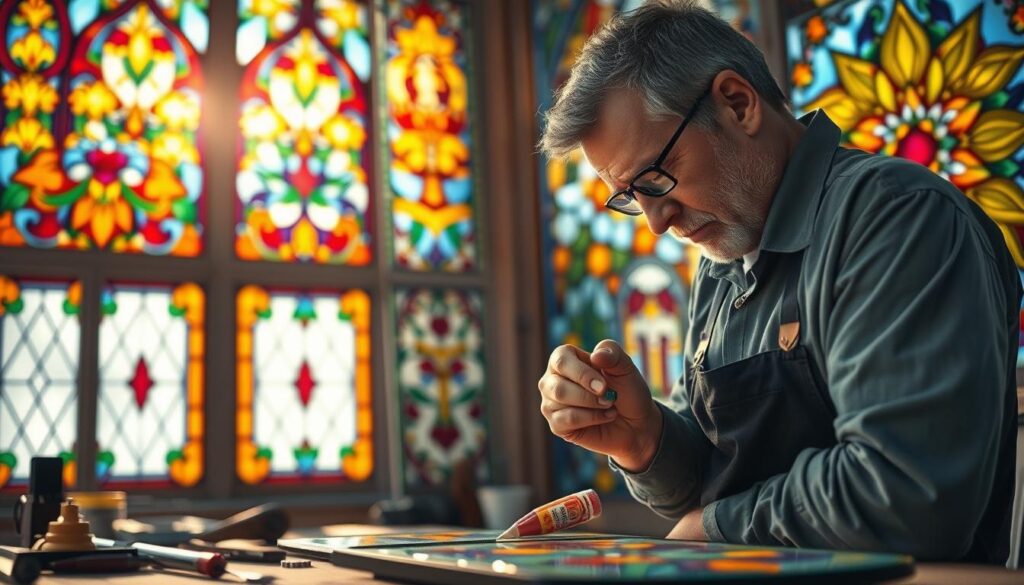
Where heritage and present-day life meet
Pretoria’s mix of older buildings and newer sites keeps decorative panels relevant. From the Union Buildings to Church Square, heritage pieces frame local character.
Repair versus full restoration
Our guiding principle is conservative first. If a small crack or a loose piece causes the issue, we often carry out repairs in situ. More severe bowing, widespread fatigue of lead cames, or persistent damp usually require full restoration. That work can mean disassembly, cleaning, re-leading and careful reassembly for long-term stability.
What to check first
Start with a quick walk-round checklist. Look for visible cracks, rattling panels, buckling, gaps in putty, and failing lead cames that no longer hold pieces firmly.
| Symptom | Likely action | Why it matters |
|---|---|---|
| Single crack | Local repair | Stops further damage and is cost-effective |
| Rattling or loose pieces | Stabilise and re-seal | Prevents moisture ingress and loss |
| Widespread bowing | Full restoration | Restores structural integrity for years |
| Fatigued lead cames | Re-leading | Essential for long-term strength |
Quick note: Ignoring early damage lets moisture and movement worsen the panel. A careful assessment keeps intervention minimal while protecting the artwork for future years.
Assessing damage and documenting every detail before you start – Stained glass window repair and creation
We begin with a close inspection at the site near the Pretoria Art Museum to map out damage and plan exact conservation steps.
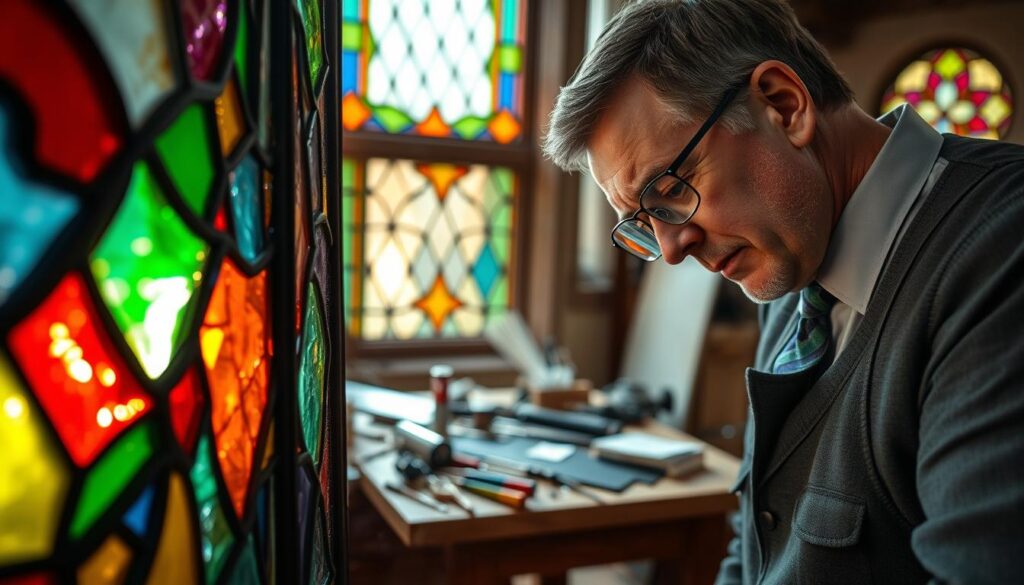
On-site condition checks for homes and historic properties
We carry out a practical survey of stained glass close to heritage sites. Natural light reveals hairline faults. We note frame movement and any signs of panel bowing.
Capturing measurements, photos and rubbings
Before we touch any pieces, we record precise measurements and high-resolution photos. We take rubbings or pattern traces to protect the original design for accurate reassembly.
Spotting structural integrity risks
Our condition flow is simple: visual scan in daylight, close inspection of joints and putty, then a gentle stability check to detect movement without stress.
Age-related factors over decades
We look for came corrosion, fatigue from heat and cold cycles, and paint loss on painted areas. These age-related factors guide our choice of restoration methods.
Why documentation matters: good records let us match colour, texture and lead geometry. For larger, buckled panels we may recommend temporary glazing while work is done to keep the opening weather-tight. Careful assessment protects structural integrity and reduces the chance of fixing one problem but creating another.
Tools, materials and techniques we use for authentic leadlight results – Stained glass window repair and creation
Our workshop blends time-honoured craft with measured modern tools to achieve lasting, authentic results.
Core tools we rely on:
- Glass cutters for clean, repeatable edges.
- Lead knives to shape and size lead cames accurately.
- Soldering irons for secure, neat joints.
- Glazing hammers for final seating and fit.

Safe cleaning and material choice
We remove grime and corrosion with gentle solutions so painted details survive. Conserving paint and textures preserves the panel’s artistry.
Material decisions respect the original. We match lead profiles and choose compatible glazing compounds to protect integrity and long-term stability.
Re-leading, soldering and weatherproofing
Re-leading is a structural step, not cosmetic. Replacing fatigued lead cames restores alignment and stability for years.
Neat, fully bonded solder joints help the panel move as one unit. Careful glazing and puttying reduce moisture ingress and limit damage from Pretoria’s heat and storms.
Traditional craft with modern precision
We use digital imaging for reference, careful matching of glass pieces and colours, and controlled firing when paint must be set. Skilled artisans make these techniques reliable.
Creating new stained glass that suits your space and matches existing panels – Stained glass window repair and creation
Our design process begins with a simple question: how should light, privacy and colour work together in your space?
We balance daylight, view control and colour harmony so new work feels part of the room. Whether for homes, offices or hospitality spaces in Pretoria, the brief guides choices about scale, tint and opacity.
Design-to-build workflow
- Concept sketches and client review.
- Full-size pattern (cartoon) and sample panels for colour tests.
- Careful selection of tones and textures, cutting, assembly and soldering.
- Finishing, firing painted details and final sealing for long life.
Matching tones and preserving colour consistency
We source matching tones and textures so new panels sit beside older ones without looking like a patch. Small shifts in hue or opal texture change how sunlight reads the pane, so we test pieces in situ.
Replicating artistry with respect
Repainting faces, florals and borders uses period-appropriate strokes. Where needed we fire paint to fix lines for longevity, preserving the original artistry rather than imitating it poorly.
Installation near landmarks such as the Voortrekker Monument or Freedom Park often needs extra bracing and weather protection because of exposure and foot traffic. Our team prioritises precision and long-term performance as much as visual beauty.
Stained glass window repair and creation: Conclusion
A lasting outcome comes from careful choices, clear records and skilled hands. Good decisions start by identifying damage, checking structural integrity and recording every detail before any work begins.
Restore with respect: use suitable lead, matching glass and period techniques so each piece keeps its integrity and historic value. Small repairs at the right time save time and original material over the years.
Common issues such as bowing, loose joints or moisture usually worsen slowly. Early action protects the panel and the surrounding fabric. We balance craft and science to preserve significance for future generations.
Handyman Pretoria stays committed to craftsmanship-led work that keeps Pretoria’s stained stories shining for years to come.