
Precision Demolition: Safe Removal of Structures
Small-scale demolition services are what we offer across Pretoria, from the suburbs to landmarks like the Union Buildings.
Are you sure that removing a single wall or outbuilding can’t be done neatly and with care?
We focus on precise, selective work for homes and light commercial properties. That means targeted removals, selective strip-outs and careful takedowns of boundary structures rather than flattening an entire site.
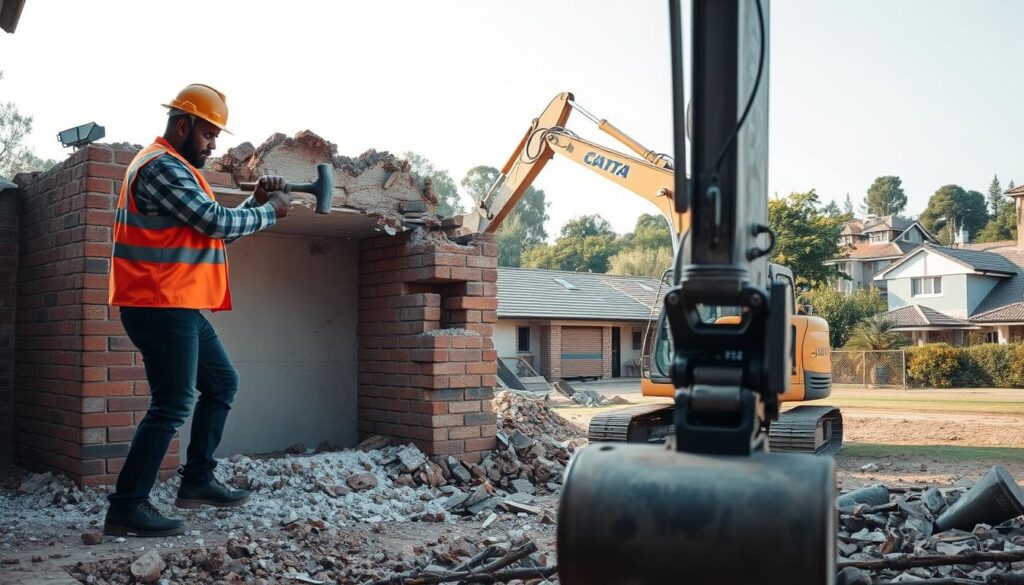
Handyman Pretoria started locally to bring control and tidiness to every project. We plan to protect what matters and hand over a tidy site on completion.
Typical reasons clients ask us for help include renovations, compliance fixes, unsafe structures or freeing space for better use. We quote based on scope, access and materials, and aim to keep disruption low for occupied properties.
Read on to see our service types, safe planning steps, compliance and waste handling, and how we cover Pretoria suburbs and key nodes around the city – Contact Us
Trusted small demolition in Pretoria for walls, sheds and outbuildings – Small-scale demolition services
Handyman Pretoria began with local, careful work and a simple aim: keep what must stay and remove what must go with minimal fuss. Our teams specialise in careful, staged removals that protect finishes, structure and neighbours.
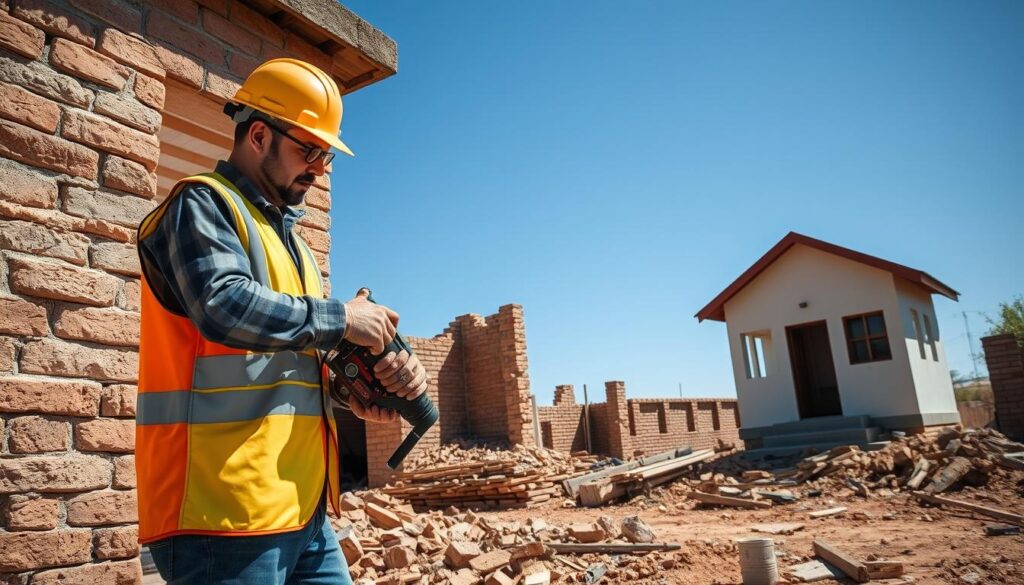
Local, careful work near the Union Buildings, Pretoria CBD and Hatfield
In busier areas such as the Pretoria CBD, Hatfield and around the Union Buildings, access, parking and business continuity shape the plan.
We coordinate deliveries, sequence noisy tasks and use dust barriers so shops and flats stay operational.
What makes small-scale work different from full site clearances
Controlled removals rely more on hand tools, protection and staged sequencing than large plant. That means tighter protection, cleaner interfaces for follow-on trades and less disruption to the rest of the building.
When to bring in professionals for selective removals and safety
- Hire professionals for any wall opening or works near utilities.
- Get help where dust, noise or shared boundaries matter — student accommodation and tight stands between Hatfield and Arcadia are a good example.
- We carry out risk checks, isolate supplies and maintain disciplined housekeeping so safety is a practical outcome, not just a policy.
| Property types | Common works | Why hire us | Local note |
|---|---|---|---|
| Homes & flats | Non-load openings, shed removal | Protect finishes, staged work | Suitable near Arcadia streets |
| Student housing | Internal strip-outs | Minimise downtime | Hatfield access planning |
| Small retail & offices | Partitions, small slabs | Clean handover for trades | Pretoria CBD parking plans |
Small-scale demolition services for homes and businesses in Pretoria
For homeowners and site managers in Pretoria, we offer clear, staged scopes for interior and exterior removals.
Non-load-bearing wall removals and interior openings
We verify structure and services before any cut. Our teams mark and test walls, then make neat openings that protect adjacent rooms.
Clean edges and protected finishes help follow-on builders work faster and reduce rework.
Kitchen, bathroom, flooring and ceiling strip-outs
We sequence strip-outs so plumbers and electricians can begin immediately after we finish. Floors, ceilings and fixtures are removed in phases to limit dust and disruption.
Outbuilding removals: sheds, garages, carports and boundary structures
In suburbs like Brooklyn and Menlyn we protect gardens, paving and access routes while we take down sheds, garages and carports.

Concrete removals and recycling
We break patios, pathways and small slabs, then sort rubble on site. Where practical we recycle concrete to reduce landfill and cut haulage costs.
Specialised removals and commercial works
Fireplaces, chimneys, hot tubs and above-ground pools need careful isolation and controlled lifting. For offices we stage reconfigurations to keep key areas operational.
| Scope | Common items | Outcome |
|---|---|---|
| Interior openings | Non-load-bearing walls, doorways | Verified cuts, protected finishes |
| Renovation strip-outs | Kitchens, bathrooms, ceilings, floors | Phased removal, ready for trades |
| Exterior structures | Sheds, garages, carports, boundaries | Garden protection, tidy site |
| Concrete | Patios, paths, small slabs | Broken, sorted and recycled where possible |
| Specialised | Fireplaces, chimneys, hot tubs, pools | Controlled handling, safe load-out |
How we plan, protect and execute demolition work safely – Small-scale demolition services
Our approach starts with a practical site appraisal that shapes every step of the job.
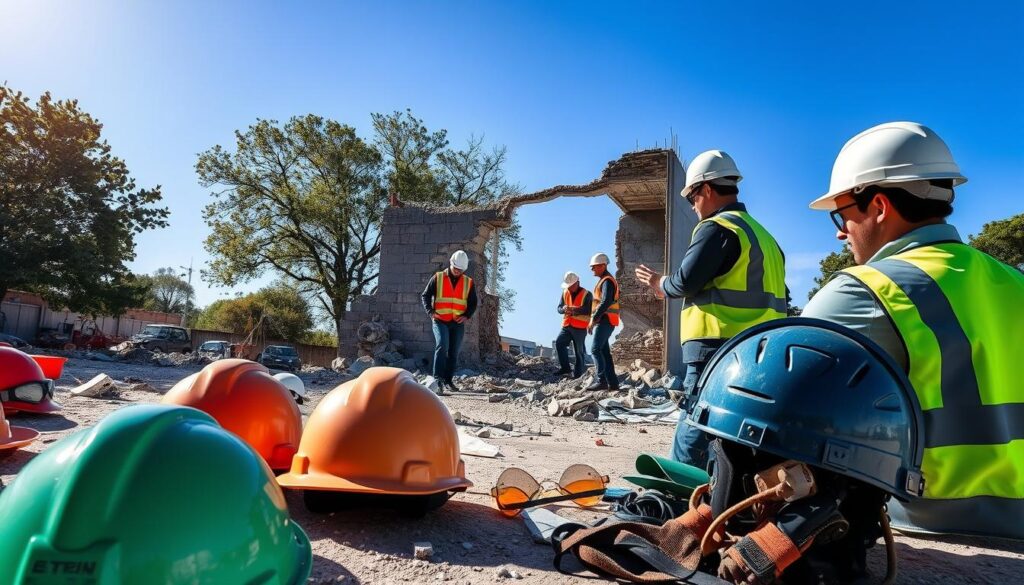
We plan first, then remove. Because most work happens in occupied homes or active business spaces, a clear safety-first plan keeps the project predictable and tidy.
Site assessment, risk checks and a clear work plan
We survey access, structural risks, adjacent finishes and shared boundaries.
That assessment becomes a simple work plan that sets timelines, expected disruption and who does what on site.
Utility isolation before any cutting or stripping
Electrics, water and gas are checked and isolated as required. This reduces preventable incidents and lets our team work with confidence.
Dust, noise and neighbour-friendly controls
We use barrier sheeting, controlled zones and dust suppression when needed.
Louder tasks are scheduled considerately — we plan deliveries and timings around event traffic near Loftus Versfeld and tight streets in older suburbs.
Choosing the right method and kit
For surgical interior works we prefer hand tools and careful cuts.
Where space allows, small excavators or light plant and machinery handle heavier removal and breaking of hard materials.
Protecting what stays
We shield floors, doors, windows, gardens and driveways so you do not pay to “fix the fix”.
Careful planning and the right method make handover cleaner for the next trade. That practical safety mindset is how we keep projects on track and neighbours happy.
Compliance, hazardous materials and responsible waste handling – Small-scale demolition services
Good compliance keeps the work auditable, safe and neighbour-friendly.
We set clear, proportionate controls for each project so owners and main contractors have a simple audit trail.
Safety files and method statements spell out scope, sequencing, PPE and site rules. We align documentation with IWMSA and EWASA guidance and keep supervision practical and visible on site.

Controlled hazardous protocols
If asbestos or lead is suspected we restrict access and follow controlled protocols. Where required, we use licensed handling and approved disposal routes. This approach keeps neighbours and tenants safe and reduces legal risk for the building owner.
Materials sorting and responsible recycling
We sort timber, steel, brick and concrete on site to cut contamination and landfill. Good recycling lowers haulage and helps local construction chains reuse resources.
Debris removal matched to site logistics
We plan load-out to match access, parking and neighbourhood limits. Smaller plant and correctly sized vehicles reduce disruption and keep the area tidy.
| Control | What we do | Outcome |
|---|---|---|
| Documentation | Safety files, method statements (IWMSA/EWASA aligned) | Auditable records, clear responsibilities |
| Hazard handling | Testing, restricted access, licensed removal where required | Safe, compliant asbestos and lead management |
| Waste handling | On-site sorting: timber, steel, brick, concrete | Higher recycling rates, less landfill |
| Logistics | Haulage planning, matched plant and vehicles | Reduced disruption, tidy handover |
Our process, timelines and service coverage across Pretoria – Small-scale demolition services
We organise every job around a simple checklist: assess, plan, isolate utilities, remove, haul and hand over.
From quote to clearance: assessment, planning, demolition, haulage and tidy-up
Our end-to-end workflow is clear and accountable.
- Site assessment: photos, dimensions and access notes.
- Planned sequence: scope, utility isolation and staged removals.
- Haulage & tidy-up: rubble sorted, recyclable streams separated and site handed over ready for construction.
What affects project duration
The main drivers are the size of the structures, site access (tight drives vs open yards), and materials — brick, concrete or timber.
Disposal or recycling needs also add time. We match plant and machinery to keep works moving: hand work for interiors, small excavators for external slabs, and correctly sized plant for safe load-out.
Where we work and landmark-based planning
We commonly support Brooklyn, Menlyn, Waterkloof, Centurion and Arcadia, plus surrounding Pretoria areas.
“Near Loftus Versfeld we plan around event traffic; by the Voortrekker Monument we map access routes for smooth movements.”
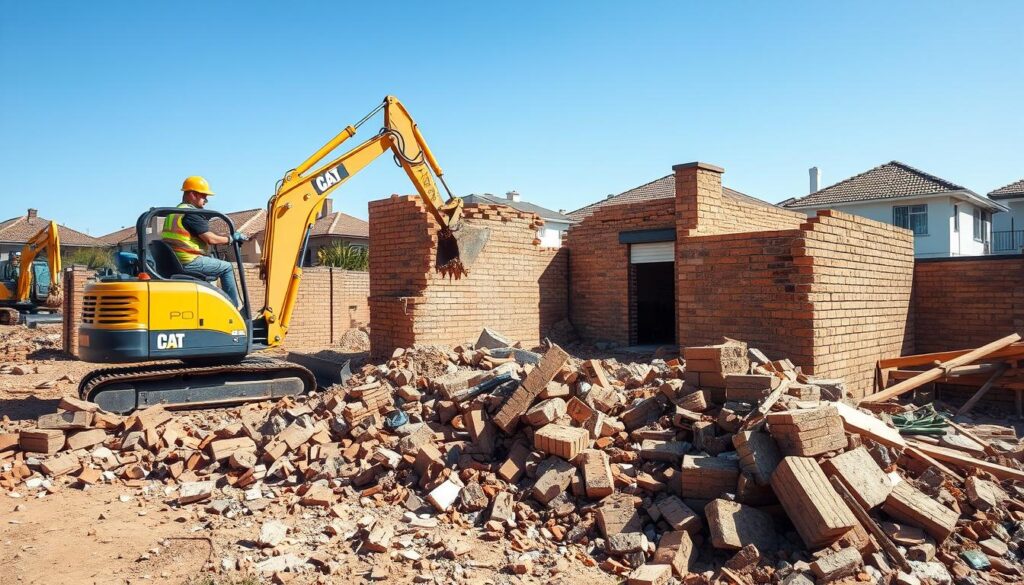
Prepare photos, dimensions and notes on access so we can quote and schedule accurately. That helps keep projects on time and reduces surprises.
Small-scale demolition services: Conclusion
Our work starts with a simple, site-specific plan that keeps disruption to homes and streets to a minimum.
We deliver precise demolition that protects existing structures, isolates utilities and controls dust and noise. That approach gives a clean handover for renovation or further construction.
Documentation aligned with IWMSA and EWASA supports every project. We follow controlled protocols for asbestos and lead, using licensed channels when needed so owners and contractors stay safe.
We sort and recycle materials where practical, use the right plant for the job, and leave the site tidy and ready for the next trade.
Across Pretoria — from Arcadia to Menlyn and near the Union Buildings — we bring practical experience, a disciplined team and a local understanding to every job.