
Export-Grade Packaging: Protecting Fragile Cargo
When you’re moving or shipping valuable assets, Professional protective wrapping and crating services can be the difference between a safe arrival and an expensive loss. We place this promise at the heart of every job in Pretoria: lower damage risk, smoother handling and delivery‑ready packing for real-world transport conditions.
Handyman Pretoria started locally, and from here we scale for households, offices, retailers and industrial clients across Pretoria and beyond. From reinforced covers to custom-built crates, we match materials to fragility, weight and destination so items reach their goal intact.

Our trained team follows a disciplined workflow that emphasises pre-planning and the right materials. That planning prevents costly damage and failed deliveries, gives better load stability, easier unloading and clear identification on arrival.
What will this page cover? We explain how wrapping differs from crating, the materials we use, our step-by-step process, Pretoria coverage, export‑readiness and the main factors that affect cost. So, how much risk are you willing to take with your next shipment – Contact Us
Protecting your items for transport across Pretoria and beyond – Professional protective wrapping and crating services

Every trip through Pretoria—from CBD lanes to Menlyn traffic—adds stress to delicate goods unless we engineer protection. We assess the item first, then match packaging to the specific risks of the route and the destination.
What we mean by “protective wrapping” versus “custom crating”
Protective wrapping means layered cushioning, abrasion resistance, corner guards and surface shielding for short-to-medium haul handling. It is fast, flexible and ideal for frequent moves or items that will be handled several times.
Custom crating is rigid, engineered protection built to exact fit. Crates account for weight distribution, lifting points, stacking loads and impact risks. For sensitive goods we add anti-static, moisture and dust barriers.
When professional protection matters most
We choose between the two based on fragility, value, sensitivity to static or moisture, handling frequency and route complexity. Pretoria realities such as narrow basement loading zones, lifts, stairwells, stop‑start traffic and speed humps raise risk.
Long-distance moves, long storage times, high-value items or shipments with long replacement lead‑times all need higher levels of care. We tailor protection to your destination — local delivery, national road freight or export shipping.
| Method | Best for | Main risks addressed | Typical add-ons |
|---|---|---|---|
| Wrapping | Frequent handling; short/medium moves | Scratches, minor shocks, abrasion | Labels, stretch film |
| Crating | Heavy, fragile or long‑haul items | Severe impact, stacking, transit shocks | Moisture barrier, anti‑static, lifting eyes |
Professional protective wrapping and crating services for homes, offices and industry
Different client sites call for different packing plans, from suburban houses to factory yards. We adapt materials and techniques to each setting so goods arrive intact and can be returned to use quickly.

Home moves: furniture, appliances and boxed household goods
For home relocations we guard surfaces, legs and corners with edge protectors and blankets. Glass panels and TV screens get dedicated cushioning while appliances have doors and fittings secured.
Boxes are labelled by room to speed unpacking and reduce handling errors.
Office and retail: IT equipment, fixtures and sensitive stock
We pack monitors, servers and POS electronics with foam inserts and clear labelling to speed re‑installation. Fixtures are stabilised for easy refit and sensitive stock gets batch segregation for fast access.
Industrial and construction: heavy equipment and machinery protection
On sites we use blocking, bracing and reinforced frames for heavy equipment. Lifting points are respected and shock reduction measures are fitted where handling is rough or lifts are specialised.
Special handling for fragile, high-value and one-of-a-kind items
Museum‑grade crates and custom supports protect art, antiques and prototypes. For high-value items we favour conservative materials and testing to reduce transit risk.
| Client type | Common items | Recommended packaging level |
|---|---|---|
| Home | Furniture, appliances, boxes | Reinforced blankets + labelled boxes |
| Office/Retail | Monitors, servers, electronics | Foam inserts + clear labelling |
| Industrial | Heavy equipment, machinery | Framed crating + blocking/bracing |
We scale from single-item jobs to full moves across Pretoria and nationwide in South Africa, matching care and handling to risk rather than using a one-size approach.
Materials and packing supplies we use to reduce damage risk – Professional protective wrapping and crating services
Selecting the right materials starts at assessment. We choose supplies to match fragility, route and storage needs.

Bubble wrap, foam, edge protectors and cushioning techniques
Bubble wrap, foam sheets and corner guards absorb shocks and stop vibration transfer. They prevent abrasion and shield edges during handling.
We use layered foam for flat surfaces and bubble for irregular shapes. Edge protectors keep corners intact when items are stacked.
Stretch film, blankets and moisture barriers
Stretch film bundles items, stabilises soft goods and secures loose parts. When scuff risk is high we add blankets beneath the film.
For longer routes or storage we apply 250-micron heat shrink wrap plus desiccants to block moisture. For metal equipment we use copper-embedded heat-shrink wrap with desiccants to reduce corrosion risk.
Boxes, tape and labelling systems
We right-size boxes, favour double-walling for heavy loads and fill voids to prevent shifting. Correct taping patterns and tamper-evident seals ensure cartons stay closed.
Clear labelling by room or department, plus handling cues, speeds unpacking and reduces misplaced items.
| Material | Purpose | Best for | Notes | |
|---|---|---|---|---|
| Bubble wrap | Cushioning | Glass, ceramics, odd shapes | Use 2+ layers for fragile items | |
| Foam sheets | Surface support | Screens, panels | Good for flat, brittle surfaces | |
| Edge protectors | Corner defence | Furniture legs, frames | Prevents crush & abrasion | |
| Stretch film | Stabilise & bundle | Mattresses, grouped boxes | Combine with blankets to avoid scuffing | |
| Desiccants | Moisture control | Long storage, sea freight | Pair with 250-micron heat-shrink | |
| Crate type | Strength | Visibility | Weight | Best-use freight mode |
| Solid | High | Low | Higher | Sea & heavy road |
| Slatted | Medium | Medium | Medium | Road & mixed freight |
| Skeleton | Low | High | Low | Short road moves |
| Environment | Must-have labels | Handling cues | ||
| Home | Room name, contents | Fragile, this way up | ||
| Office | Department, asset ID | Electronics, heavy | ||
| Industrial | Part number, hazard | Use fork, centre lift |
Timber choice matters: pine is lighter; saligna gives higher strength for long sea voyages. We pick solid, slatted or skeleton crates to balance strength, visibility and weight for each route.
Our process: from assessment to delivery-ready packaging – Professional protective wrapping and crating services
We begin every job with a practical plan that turns uncertainty into a clear, manageable packing day. Our approach sets expectations for time, materials and handling so clients know what to expect on the day.

Pre-planning and item assessment
We assess size, fragility, vibration sensitivity and moisture risk. This lets us set a protection level: standard, reinforced or export-ready.
Room-by-room or item-by-item workflow
For homes we pack room by room to speed unpacking. For offices and industry we work item by item to avoid mix-ups and maintain asset IDs.
Crate design, build and final checks
Custom crates are measured for an exact fit. We add internal bracing, cushioning interfaces and clear access for safe lifting. Before transport we lash, strap and verify centre-of-gravity and stacking limits.
| Workflow stage | What we do | What you get |
|---|---|---|
| Assess | Measure & rate risk | Right protection level |
| Protect | Select materials & pack | Less damage during transport |
| Secure | Lash, strap, label | Stable, transport-ready load |
| Before we arrive | During packing | After packing |
| Clear access, list items | Watch handling, check labels | Inspect seals, request a quote |
Quality control: our team performs final stability checks and seal inspection before any consignment leaves site. If you need expert advice on professional packing or packing services, request a quote.
Pretoria coverage: where we typically wrap, crate and prepare consignments – Professional protective wrapping and crating services
Across Pretoria CBD and eastern nodes we run mobile teams that prepare consignments at your door. Our on-site approach speeds handover to a removal vehicle or freight carrier and keeps the workflow organised.

Central and east footprint
We work frequently in Pretoria CBD, Sunnyside and Brooklyn. Typical jobs include apartment moves, office fit-outs and retail installations near major commercial nodes.
Nearby landmarks we serve
We operate close to Union Buildings, Loftus Versfeld and Menlyn Maine for quick turnarounds on office moves, new home relocations and retail consignments.
Access, handling and time windows
We plan around loading bays, lift sizes, security sign-in and limited parking. Where corridors are narrow or elevators shared, we add extra edge protection, blankets and controlled movement to protect items during handling.
On-site preparation reduces double-handling, saves time and makes destination handovers smoother.
| Site type | Common constraints | Our mitigation |
|---|---|---|
| High-rise apartments | Small lifts, tight corridors | Measured lifts, corner guards, stair-handling plan |
| Office parks | Booked bays, security checks | Pre-booking, asset tagging, timed arrivals |
| Retail centres | Loading dock limits | Staged packing, pallet prep, quick handover |
| Industrial yards | Heavy access, vehicle movement | Forklift-ready crates, blocking/bracing |
| Pretoria area | Typical job type | Common request |
| Pretoria CBD | Office move | Crating & export prep |
| Sunnyside | Apartment move | Wrapping-only for furniture |
| Brooklyn | Retail install | Container preparation |
| Menlyn | New home delivery | On-site packing & handover |
Crating and securing solutions for local, national and export requirements – Professional protective wrapping and crating services
Good crating starts with understanding how loads behave on road and at sea. We prepare each consignment to meet carrier needs and export standards so handovers run smoothly and claims risk is low.
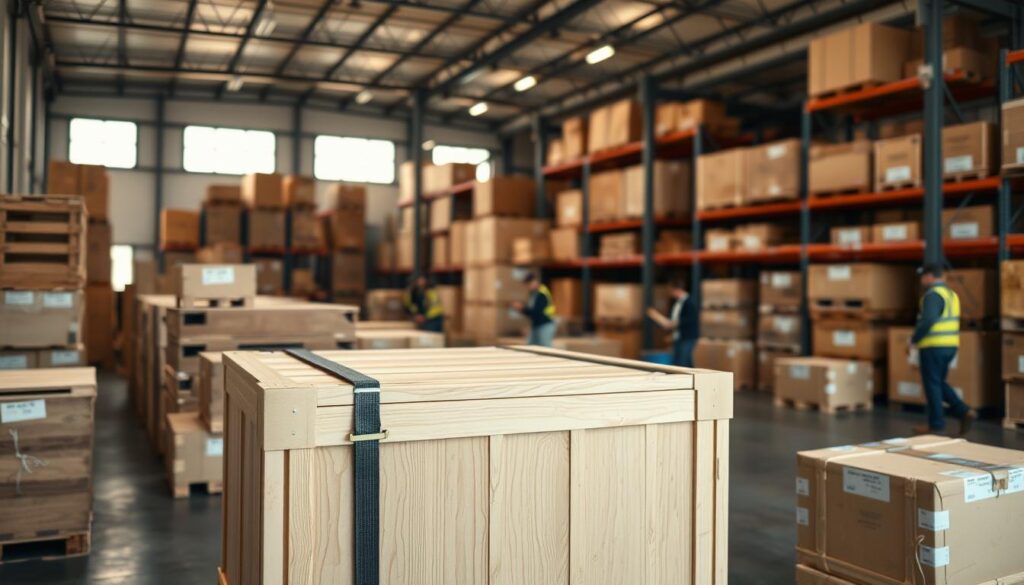
Road freight readiness
Shock reduction: layered cushioning, foam seating and internal bracing cut vibration transfer during long hauls.
Stacking strength: timber frames and rated pallets distribute loads to avoid collapse when stacked.
Handling cues: clear labels and lift points speed multiple handovers with less damage.
Sea and container preparation
We differentiate truck-ready from export-ready packaging. For export we use timber crates (pine or saligna), internal bracing and moisture control to meet longer exposure requirements.
On-site lashing and strapping
Our teams secure 20ft, 40ft and high-cube containers plus flat-racks using correct anchor points, tensioning and chocks to prevent shift in transit.
Turnkey project packing
For staged deliveries we pack batches as equipment completes, keep inventory keyed and protect items during interim storage until final dispatch.
| Freight mode | Main risks | Recommended packaging level | Typical add-ons |
|---|---|---|---|
| Road | Vibration, minor impacts | Reinforced | Edge guards, labels |
| Sea / container | Moisture, heavy impact | Export-ready | Solid timber, desiccants |
| Flat-rack | Exposure, lateral shift | Crated + lashed | Chocks, straps |
| Checklist | Item | Status | |
| Floor | Condition check | Done | |
| Dunnage | Selection & placement | Done | |
| Plan | Restraint plan & photos | Done | |
| Seal | Seal / tamper check | Done |
Transparent options and what affects pricing – Professional protective wrapping and crating services
Clear quotes start with clear details. We base a fair price on item size, fragility, access, destination and the timing you need. This lets us match packaging to budget while keeping damage risk low.
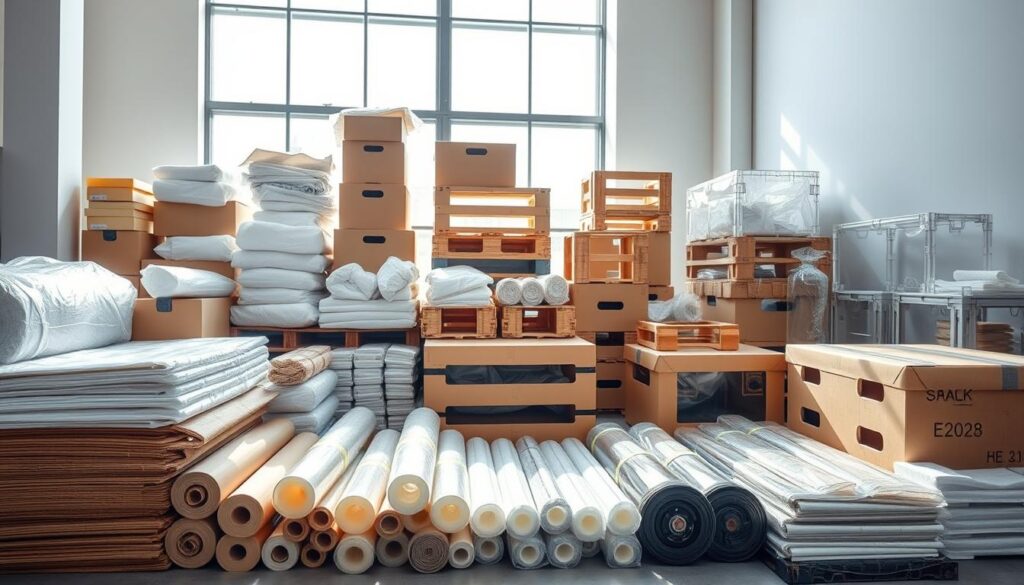
Key cost drivers: size, fragility, destination and timing
Costs rise with larger dimensions, heavier weight and fragile content. Tight access or after-hours work adds time and labour. Long-distance or export trips need higher packaging levels and extra materials.
When custom crates are recommended versus heavy-duty wrap
For robust items on short moves, heavy-duty wrap plus edge guards is often enough.
We recommend custom crates for high-value, odd-shaped or multi-handled goods, and for export where stricter requirements apply.
Practical scope increases
Additional charges typically stem from disassembly, reassembly, extra labelling, moisture barriers or container lashing. These items need more packing materials and skilled labour.
Service options and best-use scenarios
| Option | Best use | Notes |
|---|---|---|
| Wrapping-only | Short moves, robust furniture | Fast, cost-effective |
| Reinforced wrap + edge protection | Frequent handling | Better surface protection |
| Custom crate | Fragile or odd shapes | Exact-fit crates |
| Export-ready crate + moisture control | Sea freight | Desiccants, sealed timber |
| Container packing + lashing | Bulk or heavy items | Chocks, straps, anchor points |
Typical materials checklist by item category
| Item | Likely materials | Common supplies |
|---|---|---|
| Furniture | Blankets, edge protectors | Wrap, tape, boxes |
| Electronics | Foam inserts, anti‑static | Bubble wrap, tape |
| Artwork | Crates, foam board | Wrap, desiccants |
| Machinery parts | Blocking, steel straps | Crates, pallets |
| Retail fixtures | Padding, film | Boxes, labels |
Packaging level selector
| Level | Risk factors | Recommended add-ons |
|---|---|---|
| Standard | Short route, sturdy | Wrap, basic tape |
| Reinforced | Frequent handling, medium fragility | Edge guards, foam inserts |
| Export-ready | Sea, long storage | Solid crates, desiccants |
Information we need to quote accurately
| Item dimensions | Weight | Photos |
|---|---|---|
| Length, width, height | Kg per item | Clear angles |
| Pick-up floor | Lift access | Destination type |
| Ground/stairs | Yes/No | Local/national/export |
| Timeline | ||
| Special requirements | ||
| Desired date | Disassembly, inventory, storage |
We aim to control spend while meeting your protection requirements. Send us the details above and we will provide a clear, itemised quote.
Quality standards, safety and care — how we minimise breakages – Professional protective wrapping and crating services
Consistent methods and clear roles reduce surprises at handover and lower damage rates. We define quality as repeatable materials choices, step-by-step techniques and a final inspection that catches faults before dispatch.
Handling electronics, artworks and delicate components
For electronics we use anti-static wrap, foam seating and relieved connector routes to stop screen flex and cable stress.
Artwork gets museum-grade barriers: clean, non-abrasive inner layers, rigid corner guards and controlled movement plans to avoid shocks.
Climate control, anti-static and controlled wrapping approaches
We select moisture barriers, 250‑micron heat shrink with desiccants, or copper-embedded corrosion intercept wrap when humidity or corrosion risk rises.
Anti-static measures are used for sensitive circuits and during unpacking to prevent electrostatic damage.
Equipment, training and on-site discipline
Our team trains on handling techniques, uses correct equipment and follows clear roles so no one rushes a lift or skips a seal check.
“Our goal is simple: carrier-friendly loads with clear labels, stable packing and predictable handling cues.”
| Risk | Prevention method | Materials used | Typical item examples |
|---|---|---|---|
| Static | Anti-static packing & controlled handling | Anti-static film, foam | Servers, PC boards |
| Moisture | Sealed barriers + desiccants | 250‑micron heat shrink, desiccant packs | Artwork, metal tools |
| Abrasion | Non-abrasive layers & edge guards | Soft wrap, corner protectors | Furniture, frames |
| Impact | Internal bracing & foam seating | Layered foam, timber braces | Machinery, sculptures |
| Crushing/stacking | Rated crates & load distribution | Reinforced frames, pallets | Palletised consignments |
Professional protective wrapping and crating services: Conclusion
A carefully engineered packing plan saves time, money and the stress of damaged items.
We protect items with the right level of packing — from reinforced wrap to custom-built crates — chosen by risk and destination. Engineered packaging and specialised anti-static or moisture barriers support safe delivery locally and for international shipping.
Our process is structured: assessment, material selection, organised packing, clear labelling and load stability checks before transport. This reduces damage, speeds handling and makes unpacking easier at the new home or office.
Whether moving furniture, office IT or heavy equipment in Pretoria (Brooklyn, Sunnyside, Pretoria CBD or Menlyn Maine), we match materials and supplies to the task for predictable results.
Request a quote or book an on-site assessment — share item lists and photos for an accurate recommendation.