Filtration Experts: Restoring Crystal Clear Water

Pool pump sand change and filter service is the key to keeping your pool water sparkling clear in Pretoria. With Handyman Pretoria we know how frustrating cloudy water can be, especially in Brooklyn, Menlyn or Lynnwood — so we explain what causes loss of clarity and how to fix it.

Why does clarity drop so often after windy days or warm spells? In short, worn media becomes rounded after a few years and stops trapping fine debris. That sends tiny particles straight back into the water and dulls the shine.

What a sand change and filter service includes: inspection, media replacement where needed, checks on seals and laterals, then a careful rinse and start-up. We’ll also isolate electrics safely and handle internals with care.

Expect clearer water, steadier flow, fewer recurring specks and less time fighting cloudiness. We’ll show warning signs, timing and pressure cues, a step‑by‑step sand change we follow, then a concise wrap‑up. We work on this job often in Pretoria and know the local quirks like wind‑blown debris and quick algae returns – Contact Us

Pool pump sand change and filter service

Why your Pretoria pool turns cloudy and what the filter is really doing – Pool pump sand change and filter service

A quiet pool can mask a busy filtration problem until tiny particles make the water hazy.

Fine dust, pollen, sunscreen and brief storms dump microscopic debris that the system must trap. In Brooklyn, Menlyn and Lynnwood we also see heavy weekend use and warm spells that boost algae growth.

Common clarity problems around Pretoria

Cloudy water often means fines are bypassing the media. The feeling of a hard-to-clean unit or needing extra backwash cycles points to worn media rather than chemicals alone.

How a sand bed works — and why it loses bite

Water passes through textured grains where particles snag. Over years the grains round off, clump or form channels so tiny contaminants slip through. That cuts the effective contact time and lets haze recur.

When more backwashing stops helping

Backwash clears trapped matter but cannot restore rough edges. Repeated rinsing gives diminishing returns. A tired system often looks like a pump problem — weak returns, odd pressure swings — so we diagnose the whole filtration system.
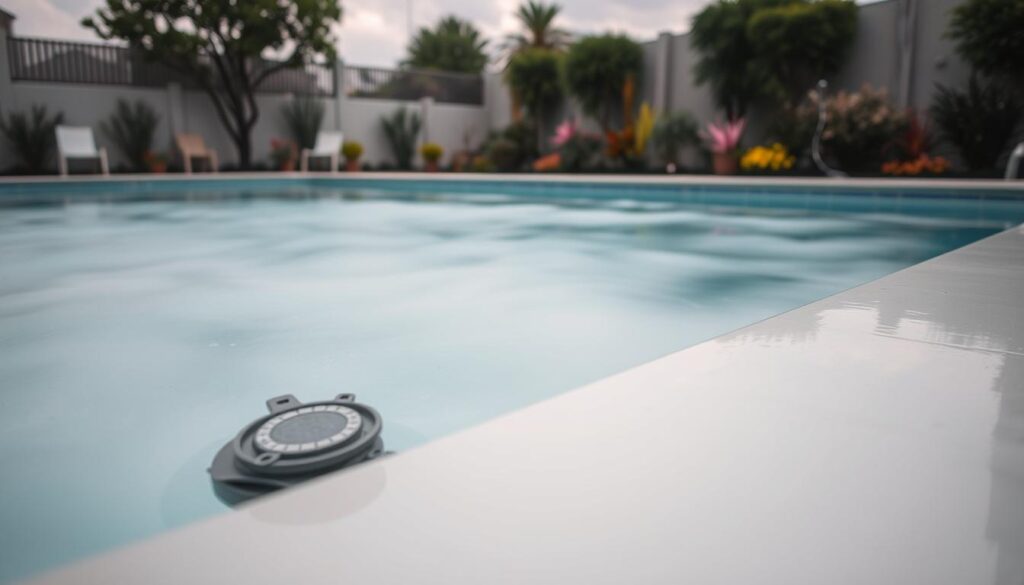
A serene Pretoria swimming pool scene showcasing cloudy water with a hint of greenish tint, indicating a need for filter service. In the foreground, the edge of the pool is visible, with some scattered pool maintenance tools like a skimmer net and water testing kit. The middle ground features the murky water, reflecting the sky's soft gray clouds. In the background, a well-kept garden with local flora adds a touch of color, contrasting the pool's condition. The lighting is soft and diffused, mimicking an overcast day, providing a calm yet concerning atmosphere. The angle captures a slightly elevated view of the pool, emphasizing the water quality, with no human figures present. The image should evoke a sense of urgency for maintenance while remaining visually pleasing and professional.

Symptom Likely cause Next step
Cloudy water Worn media or fines passing Test water, inspect media, consider replacement
Fast algae return Poor filtration contact or chemical imbalance Balance chemicals, deep clean media
High/low pressure Blocked lines, channeling, valve faults Trace flow, service valves, clean laterals
Sand in water / poor suction Broken laterals or air leaks Inspect internals, replace parts, repair leaks

Pool pump sand change and filter service: when to do it and what to expect

Timing a media replacement correctly avoids repeated backwashes and constant chemical top-ups. We recommend a planned approach so clarity never collapses overnight.

Replacement timing

Most media needs replacing every three to five years. Heavy use, dusty surroundings or inconsistent maintenance shorten that span. We treat the timeline as a guideline and adjust for your bather load and local conditions.

Signs it’s time

Watch for a dull sparkle to the water, a unit that takes longer to clean, more frequent rinse cycles and algae that returns quickly. These are practical signals that the bed has lost its grit and is letting fines slip through.
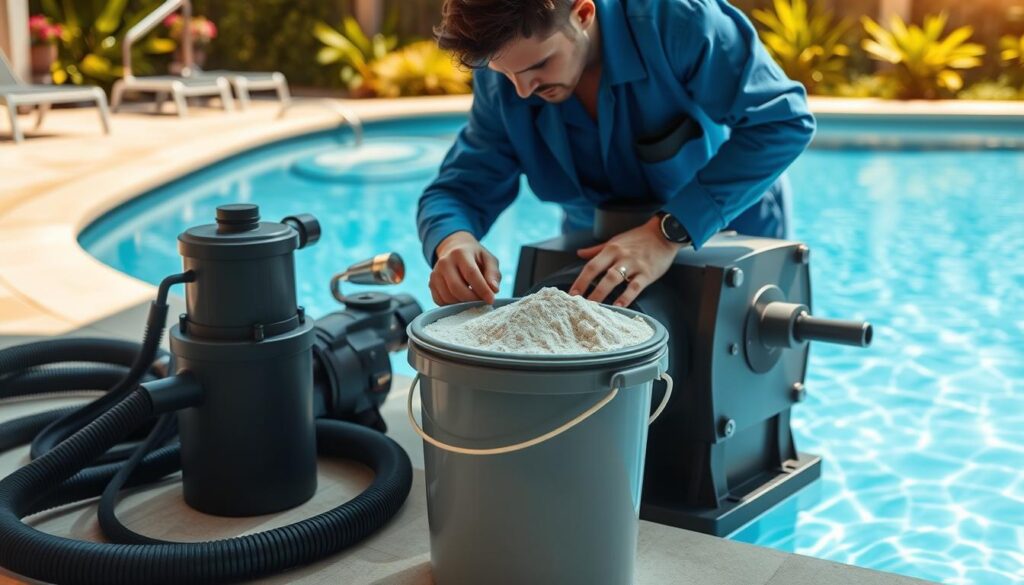
A professional pool technician in a blue uniform is carefully changing the sand in a large pool filter system, focused and precise. The foreground showcases various tools, including a sand vacuum and hose, along with a bucket filled with clean sand. In the middle ground, the filter unit is prominently displayed, highlighting its intricate components and connections. The background features a bright, sunny pool area with crystal-clear water, lush green plants, and a clean deck, creating a serene and inviting atmosphere. The scene is well-lit, capturing the sunlight reflecting off the water, and shot from a slightly elevated angle to provide a comprehensive view of the service process. The mood is professional and efficient, conveying the importance of regular pool maintenance for enhanced water clarity.

Pressure clues

Rising pressure often points to a compacted media bed or a blockage. Unusually low pressure can indicate air leaks or a suction restriction. We always check flow at the returns as well as the gauge, and compare readings to your clean baseline — around one bar is a useful reference, though every system differs.

What a full visit includes

Beyond replacing media we inspect valves, seals, laterals and general equipment condition. That reduces repeat problems and helps the system return to steady flow and a stable pressure reading after start‑up.

Usage Summer (storms) Winter (drier) Recommended interval
Light (private, low bather load) Check quarterly Check twice yearly 4–5 years
Medium (regular family use) Check monthly after storms Check quarterly 3–4 years
Heavy (frequent parties, high bather load) Check fortnightly after storms Check monthly 3 years

Locally, after windy days near the Pretoria National Botanical Garden or visits to Freedom Park, fine dust and organic debris spike. We suggest a short filtration boost and a quick pressure/flow check to prevent fines recirculating.

How to change sand in a pool filter safely (DIY steps we follow) – Pool pump sand change and filter service

Start with safety and a plan: that prevents common mistakes and saves time on site.

Safety first

Isolate electrics before touching the unit. Set the multiport valve to close and open the bottom drain. Let the tank empty fully before loosening clamps or bolts.

Open the tank and remove old media

Undo the lid carefully to avoid cracking fittings. Take photos of plumbing and valve orientation to help reassembly.

Use a wet vac to lift out media in stages. Protect the standpipe so grit cannot fall inside and return to the water.

Replace laterals, inspect seals and refill

Laterals (“spiders”) are a common hidden failure. Replace them during this job to stop grit sneaking back into the returns.

Check O‑rings for nicks or flattening. Apply a thin coat of silicone lubricant, then refill with the correct media amount. Fill the tank with water to just under the lid.

Start‑up sequence and troubleshooting

Close the air valve, set the valve to rinse and run the unit briefly, then switch to filtration. Confirm stable flow at the returns and that pressure settles near your clean baseline.

If pressure is high, suspect overfilling or compaction; if low, check for air leaks on the suction side or a blocked basket.

A well-lit workshop setting showcasing a step-by-step guide on changing sand in a pool filter. In the foreground, a person in modest casual clothing is carefully pouring new sand into a pool filter, demonstrating technique. The middle ground features a clear pool filter, open and surrounded by tools like a screwdriver, bucket, and sand. In the background, shelves with pool maintenance supplies and a well-organized workspace add context. Soft natural lighting filters in from a nearby window, creating a clean and professional atmosphere. The image captures a sense of clarity and precision, making the task of changing sand in a pool filter approachable and safe.

Tools / Materials Notes
Wet vac For staged removal
New laterals (spiders) Replace during media work
Seal kit & silicone lubricant Prevent air leaks
Media (silica or glass) Correct grain size is essential
Spanners, hose, bucket, goggles Basic kit for safe handling
Media type Lifespan Flow benefits Backwash water use
Silica (0.45–0.55 mm) 3–5 years Good capture, cost‑effective Higher
Glass media ~8 years Better flow, finer capture Lower
Cost driver Typical range / notes What raises cost
Media choice From R899 for basic media Glass costs more but saves water
Parts (laterals, seals) From R200–R1 200 depending Stuck clamps, brittle pipework
Labour / access Varies by job complexity Hard access, valve rebuilds

When Handyman Pretoria handles this, we follow the checklist above so the unit returns to steady filtration quickly.

Pool pump sand change and filter service: Conclusion

Most cloudy outcomes have a simple cause: worn media that no longer traps fine debris. Over about three to five years grain surfaces round off, which reduces clarity and forces more frequent backwash.

Use this practical decision rule: if you backwash more often, lose sparkle quickly or see recurring issues, it’s usually time to inspect the bed and consider a media refresh. Record a clean baseline pressure after any work so future problems appear early.

Good results come from the whole system working together — correct flow, healthy media, valves set correctly and routine maintenance. Local Pretoria dust and wind speed up loading, so staying ahead saves time and keeps swimming enjoyable.

We can handle the job end‑to‑end or guide you through the safe DIY steps if you prefer.

FAQ – Pool pump sand change and filter service

Why does my Pretoria pool turn cloudy even though the filtration system is running?

Several things reduce clarity: worn media that no longer traps fine particles, clogged laterals or a faulty multiport valve, poor circulation caused by a weak motor, or chemical imbalance that allows algae to bloom. We inspect media condition, check pressure readings and test water chemistry to pinpoint the root cause and restore clear water.

What common clarity problems do you see around Brooklyn, Menlyn and Lynnwood?

In those suburbs we often find excess debris from trees, wind-blown dust and increased algae after hot spells. We also see older filters with compacted media and pumps losing prime. Each of these reduces filtration efficiency and requires different fixes: cleaning, media renewal, or pump repair.

How do sand filters trap debris, algae and fine particles, and why does performance drop over time?

The media creates a porous bed that captures particles as water passes through. Over time fines and oil binders clog the pore spaces, reducing flow and raising pressure. Backwashing helps but eventually the media compacts or degrades, and filtration effectiveness falls off.

When does more backwashing stop helping and what are the tell-tale signs the media is worn?

If you backwash frequently but clarity doesn’t improve, if pressure rises quickly after cleaning, or if the pool develops recurring algae, the media is likely spent. Cloudy water despite normal backwash routines is a clear indicator to replace the media.

How often should filter media be replaced in Pretoria conditions?

For most silica media we recommend replacement every three to five years. Heavier use, frequent storms or high debris loads can shorten that interval. Glass media often lasts longer; we discuss options based on usage and local conditions.

What signs tell us it’s time to replace the media rather than try more maintenance?

A dull surface sheen on the water, longer rinse cycles, frequent algae returns and a filter that needs constant attention all point to replacement. If we cannot restore clarity through cleaning and chemical adjustment, we recommend new media.

What do pressure readings reveal and what should normal look like after service?

Rising pressure indicates trapped debris or compacted media. After a proper media change and backwash the pressure should drop to within the manufacturer’s recommended range and remain stable during normal operation. We record pre- and post-service values for comparison.

Can you explain service intervals by usage, season and filter type (sand vs cartridge vs DE)?

Light residential usage with seasonal cover may need media work every four to five years. Heavy use or commercial pools require more frequent attention. Cartridge systems need cartridge replacement or deep cleaning more often, while DE systems demand regular recharging and occasional grid replacement. We tailor intervals to each situation.

How should we keep filtration efficient after windy days near Pretoria National Botanical Garden and Freedom Park?

Increase skimming, vacuum where needed, run the system longer and check the skimmer baskets. After windy days we often perform a backwash or clean cartridges to remove extra debris and prevent rapid media clogging.

What safety steps do we take when changing media ourselves?

Isolate electrical supplies, set the multiport valve to close, relieve pressure and drain the tank. We follow a checklist to protect laterals and avoid injury. If you’re not confident, we advise engaging a technician.

How do we open the filter and remove old media without damaging laterals?

Carefully support the shell, loosen clamps evenly, and lift the top straight up. We remove media slowly using a wet vac or buckets to avoid stressing the laterals. Inspecting the laterals for cracks before refilling is essential.

Should we replace laterals and seals when changing media?

We recommend inspecting and often replacing the laterals (spiders) and lid and tank seals at the same time. Worn parts compromise flow and allow leaks or channeling, which reduces filtration performance.

Which media is better for Pretoria conditions: silica sand or glass media?

Silica sand is economical and widely used; glass media offers better filtration, improved flow and longer life with less backwash water. We compare lifespan, clarity improvement and water use to choose the right option for your setting.

What is the correct start-up sequence after refilling the filter with new media?

Replace laterals and seals, add media to the recommended level, reassemble and fill the tank slowly, then perform a thorough backwash and rinse until discharge runs clear. Finally, check pressure and confirm steady flow before returning the system to normal filtration.

What tools and materials should we have on hand for a media replacement?

Essential items include a wet vac, replacement media, spare laterals or spiders, new seals and lubricant, basic hand tools, and PPE. We prepare a checklist for every job to avoid delays.

How do silica and glass media compare for lifespan, flow and backwash water use?

Glass typically lasts longer and traps finer particles, giving better clarity and reduced backwash frequency. Silica is cheaper up front but may require more frequent replacement and more backwash water over time. We provide a cost-benefit comparison for each client.

What are the typical cost drivers and example price ranges for a media change in Pretoria?

Costs depend on labour time, media type and parts replaced. For example, a basic media refill with standard silica might start around R899 plus labour, while premium glass media and new laterals increase the total. We give a detailed quote after inspection.

How do chemical balance and mechanical filtration work together to prevent algae?

Mechanical filtration removes organic particles that feed algae, while correct sanitiser levels kill microscopic organisms. We balance both — improving filtration efficiency reduces chemical demand and lowers the risk of recurring blooms.

How quickly can we restore clarity after a media change and service?

Most pools show marked improvement within 24 hours after a proper media change, backwash and chemical adjustment. We monitor the system and follow up to ensure clarity and stable pressure.
WhatsApp Us: 083 383 9879