
Smart Pool Technology: Control Your Pump remotely
Pool pump automation and smart control setup is a simple upgrade that can cut running costs while making pool care effortless.
Handyman Pretoria helps homeowners in Brooklyn, Hatfield and Pretoria East see real gains. We explain how a modern pool automation choice can reduce energy use and simplify daily chores.
Many local properties suffer high electricity bills, irregular filtration and wear from manual switching. We will show a clear path from planning to commissioning. The guide covers entry-level Wi‑Fi switching up to premium platforms, safe installation and practical programming.
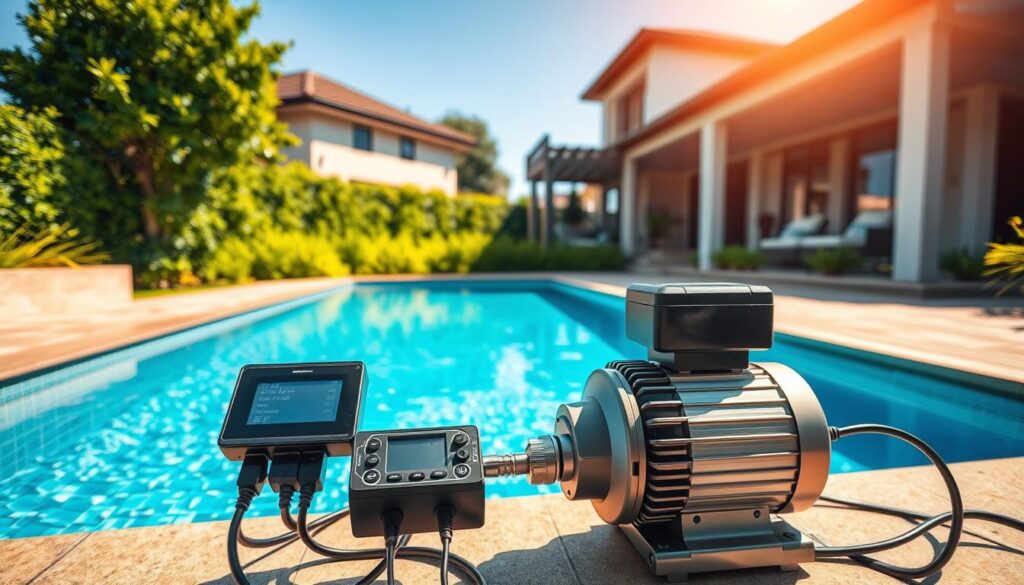
Expect brand‑agnostic advice tailored to townhouses near Menlyn Maine and freestanding homes with larger equipment pads. Our aim is simple: clear water, steadier run times and fewer emergency call-outs.
Read on to see what success looks like and how this system can change routine maintenance for good – Contact Us
Intro: smarter pool ownership in Pretoria right now – Pool pump automation and smart control setup
A modern Pool pump automation and smart control setup brings real peace of mind during Pretoria’s load‑shedding, windy days and busy weekdays.
We wrote this guide for homeowners in Brooklyn, Hatfield and Pretoria East who still rely on old timer boxes. Families near the Union Buildings or around Menlyn Maine want reliable filtration without daily checks.
Where this guide fits
App-based systems let you override on/off remotely, schedule cycles and receive alerts while you are away. Voice assistant compatibility (Alexa, Google Home) is common for many platforms.
What this actually means for your swimming pool
- Basic switching: safe remote on/off and simple schedules for single equipment.
- Full controller: relays, expandability, sensor support for chlorination, lights, heaters and water features.
- Everyday outcomes: fewer missed run cycles, clearer water after windy afternoons, simpler pool management on weekends away.
| Feature | Basic switch | Full controller |
|---|---|---|
| Remote on/off | Yes | Yes, with app scenes |
| Scheduling | Simple timers | Advanced, multi‑cycle |
| Sensor support | No | Yes (flow, temp, chemistry) |
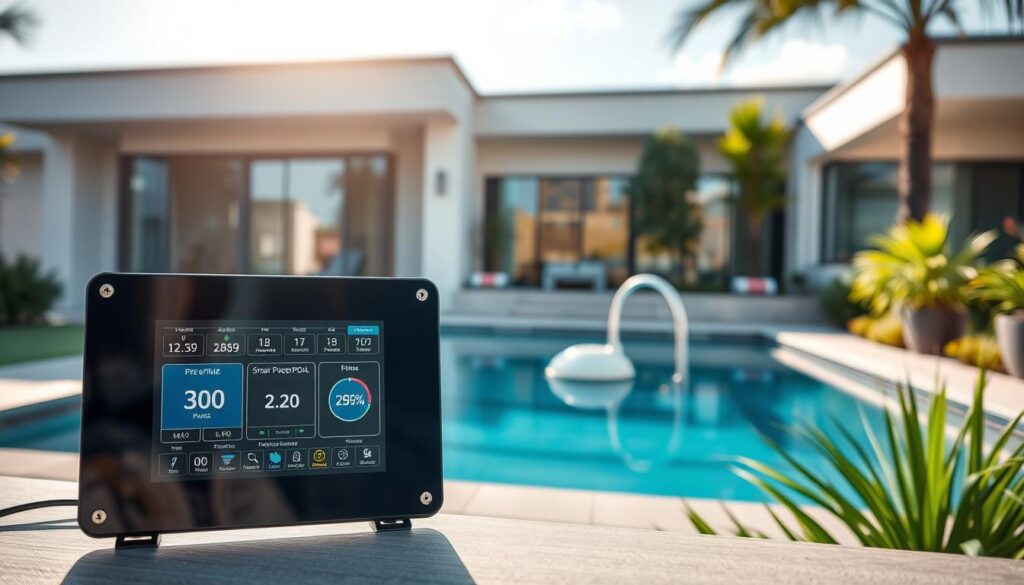
We recommend DIY for planning and app setup, but suggest qualified electricians for wiring and commissioning to ensure safe, long‑term operation.
Planning your Pool pump automation and smart control setup – Pool pump automation and smart control setup
Good planning saves money and time. We begin by defining outcomes so choices match household needs in Pretoria — from compact town gardens to long suburban service runs behind garages.
Define goals
Decide the main aims: energy savings, easier scheduling, steady water chemistry and safer operation around children and guests.
Start with outcomes, not gadgets. That keeps the project practical and cost‑effective.
Audit your existing pool system
Check pump type (single vs variable speed), timer condition, DB capacity and whether you have a chlorinator/salt unit, lights, heater or water features on the equipment pad.
Note conduit routes, enclosure space and weather exposure. These affect where automation control hardware can mount safely in Pretoria properties.
Connectivity checklist
Confirm a reliable 2.4GHz Wi‑Fi signal at the equipment area. Devices like Tuya class modules require strong 2.4GHz coverage for scheduling by day/time/duration.
Weak signal signs include failed pairing, intermittent schedule execution or delayed app updates. Practical fixes: a nearby mesh node, temporary test with a phone at the pad, or weatherproof antenna positioning.
| Feature wishlist | Required equipment | Notes |
|---|---|---|
| Energy scheduling | Variable speed motor or timer | Matches run times to off‑peak power |
| Chemistry stability | Chlorinator / salt sensor | Reduces chemical waste with targeted runs |
| Lighting scenes | Low‑voltage transformer & lights | App scenes need relay and dimming support |
| Pre‑install checklist | Status | Action |
| Conduit routes | Available | Confirm path to DB |
| Enclosure space | Limited | Choose compact modules |
| Shade / rain exposure | Exposed | Plan weatherproof housing |
| Risk flags | Implication | Recommended step |
| Undersized cabling | Overload risk | Upgrade before fitting relays |
| Corroded terminals | Poor connections | Replace or clean |
| Water ingress signs | Short risk | Improve seals / local electrician review |
Choosing the right automation system for Pretoria homes – Pool pump automation and smart control setup
Selecting the correct platform depends on how many pieces of pool equipment you want to manage. We break down entry-level switches and full controllers so you can pick what fits your yard, budget and local weather risks.
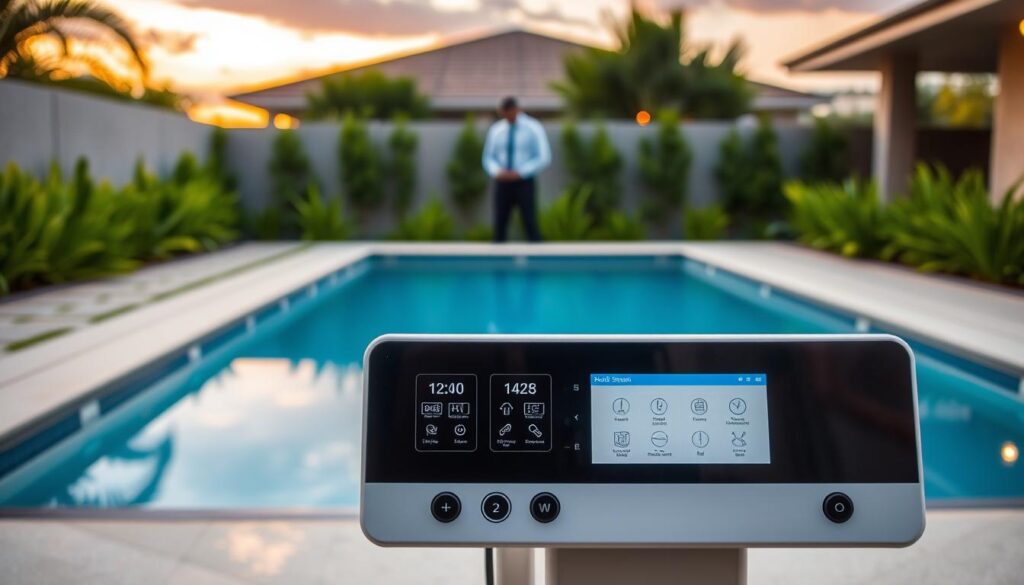
Entry-level Wi‑Fi switching (20A / 4.4kW class)
Best for single-equipment installs. These compact modules offer remote on/off, simple schedules and app overrides. A common example is the Tuya SmartLife class 20A switch (110–250V AC, 2.4GHz only) — an accessible option often around R330 VAT incl.
They suit small suburban gardens or townhouses with no heaters, lights or salt cells to manage. Expect voice assistant support (Alexa/Google) and basic IFTTT integrations.
Mid to premium controllers
Choose relays and modular controllers when you need lighting, heaters, salt chlorinators or water features coordinated together.
Why it matters: expandable relays, sensor inputs and manufacturer support reduce future upgrade costs and protect investments on larger stands in Pretoria East.
Pentair IntelliCenter
Pentair IntelliCenter offers app-led control, modular add-ons and long-term firmware support. It’s a strong pick where long service life and part availability matter.
Hayward OmniLogic & Jandy iAquaLink
These brands shine when existing equipment is already compatible or when a particular app experience is preferred. They provide wide sensor support and good third-party accessory ranges for entertaining areas near Menlyn Maine.
| Platform | App control | Voice assistants | Expandability | Sensor support | Suitability |
|---|---|---|---|---|---|
| Entry-level Wi‑Fi switch | Yes | Yes | Limited | None | Single-equipment, small yards |
| Mid‑range controller | Yes | Often | Good (relays) | Flow/temp | Family pools with heater |
| Pentair IntelliCenter | Yes (Pentair Pool app) | Yes | High, modular | Extensive | Large estates, long-term support |
| Hayward / Jandy | Yes | Yes | High | Strong | Existing brand systems, lighting & spa |
| Homeowner profile | Best-fit option | Why | |||
| Pump-only townhouse | Entry-level Wi‑Fi switch | Low cost, simple schedules | |||
| Family pool with heater | Mid‑range controller | Coordination of heater & filtration | |||
| Entertaining with lights & features | Pentair / Hayward / Jandy | Scenes, sensor support, reliable app |
Local note: choose weatherproof enclosures and surge protection for Pretoria storms. Larger stands benefit from modular controllers for future expansion and better service support.
Installation approach: wiring, safety and compliant setup – Pool pump automation and smart control setup
Correct wiring and good weatherproofing are the foundation of any lasting system at a suburban equipment pad. We focus on practical steps that reduce faults and simplify long‑term pool care.
Compliant installation means safe isolation, correct protective devices, neat labelling and a controller location that limits moisture and heat stress. Always plan for proper earthing, an accessible isolation switch and surge protection sized for local power conditions.
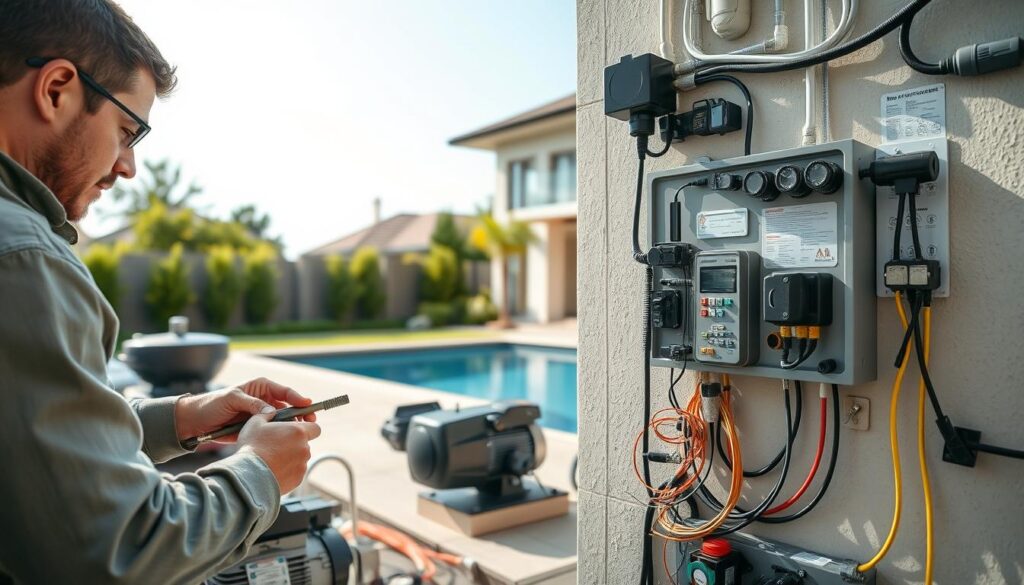
Best practice for placement and weather protection
Mount controllers in shaded, elevated positions away from direct splash zones. Provide drip loops, sealed cable glands and IP66 enclosures for exposed modules during Pretoria summer storms.
Load handling basics
Match relay and contactor ratings to the motor current draw. Undersized relays cause burned contacts and nuisance trips; correct sizing protects equipment and reduces repair costs.
Surge protection and cabling routes
Fit surge devices at the incoming supply and near the controller. Use tidy, separate conduits for wet and dry wiring to limit corrosion and make future pool maintenance easier.
| Common mistake | Consequence | Prevention |
|---|---|---|
| No enclosure | Water ingress, failures | IP‑rated housing (IP66) |
| Poor earthing | Shock risk, erratic trips | Test and document earthing |
| Mixed conduits | Corrosion, short circuits | Separate wet/dry routes |
| Controller placement checklist | Status | Action |
| Sun exposure | Low | Mount in shade |
| Rain splash zone | Avoid | Elevate & seal |
| Wi‑Fi strength | Good | Verify at pad |
Practical tip: document the isolation points and cable routes for the installer. A tidy install means fewer call‑outs during high season and longer service life for the whole system.
Programming smart schedules that cut running costs – Pool pump automation and smart control setup
A few well-crafted schedules cut costs and stop you over‑running equipment out of habit.
We programme by matching cycles to real needs: low‑speed filtration for clarity, short high‑speed bursts for vacuuming, and targeted circulation for heating. This keeps water balanced while using less electricity.
Variable speed programming: matching filtration, cleaning and heating modes
Simple mode strategy: run a long, low‑speed filtration period daily for clarity. Add a timed higher speed run for cleaning tools and a separate short run for heater circulation when required.
Off‑peak scheduling strategy: how we structure cycles for efficiency and water clarity
We prioritise off‑peak windows in Pretoria and split runs into multiple short blocks rather than one long block. Short bursts after windy days remove debris, while longer low‑speed runs maintain chemical stability during hot weeks.
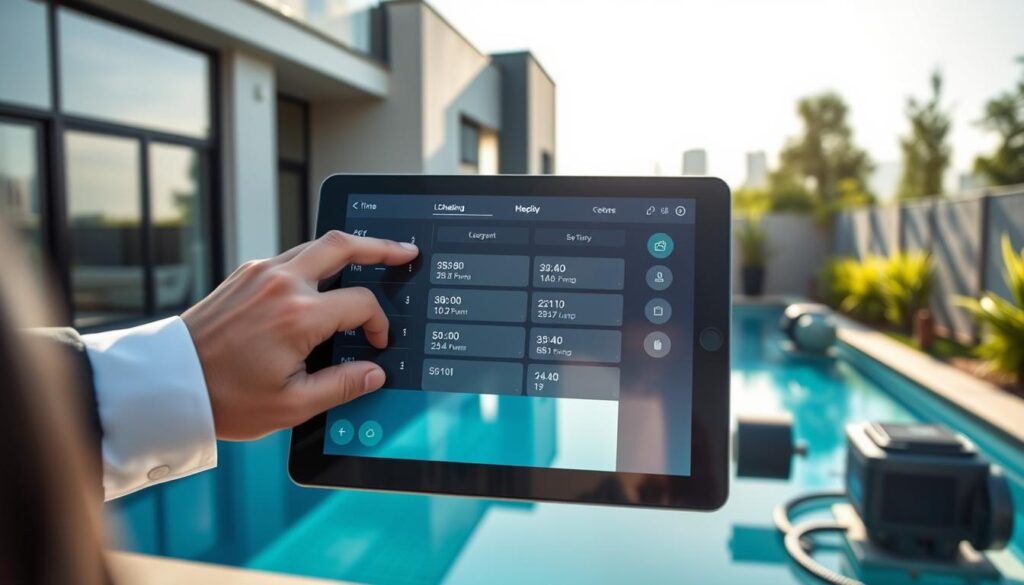
| Use case | Mon–Fri | Weekend | |
| Family swim season | 2×2hr low speed (early morn, late eve) + 30min high speed after heavy use | 3hr low speed + 1hr high speed | |
| Low‑use winter | 1×1.5hr low speed (midday) | 1×2hr low speed | |
| Heavy leaf fall | 3×1hr low speed + 15min high speed post‑leaf drop | 4×1hr low speed + 30min high speed | |
| Mode | Speed concept | Typical duration | Purpose |
| Filtration | Low (30–50% motor) | 2–4 hours total | Clarity & chemical stability |
| Cleaning | High (80–100%) | 15–60 minutes | Vacuum, debris removal |
| Heating circulation | Medium (60–80%) | 30–90 minutes | Move heated water through heater |
| Symptom | Schedule adjustment | When to act | |
| Cloudy water | Increase low‑speed run by 1 hour daily | 24–48 hours | |
| Algae pressure | Add a daily high‑speed surge and check chemistry | Immediate | |
| Dusty/windy week | Add 2×15min high‑speed bursts after peak wind | Daily while dusty | |
| High bather load | Extra 30–60min filtration after use | Same day |
Expected savings: variable speed strategies can reduce electricity use by up to 70% in ideal cases. More commonly, when we combine precise scheduling, off‑peak runs and fewer high‑speed hours, homeowners see typical reductions of 30–40% over a month.
These figures depend on local tariffs, existing equipment and seasonal needs in Pretoria. We recommend logging usage for a month before and after changes to confirm actual savings for your system.
App control, voice control and everyday pool management – Pool pump automation and smart control setup
Modern apps give clear status, timely alerts and easy modes that reduce needless trips to the equipment pad.
Remote essentials: an app must offer quick on/off override, concise status icons and alerts that matter. Holiday mode should schedule extra circulation, silence non‑urgent notices and notify us only for faults that need attention.
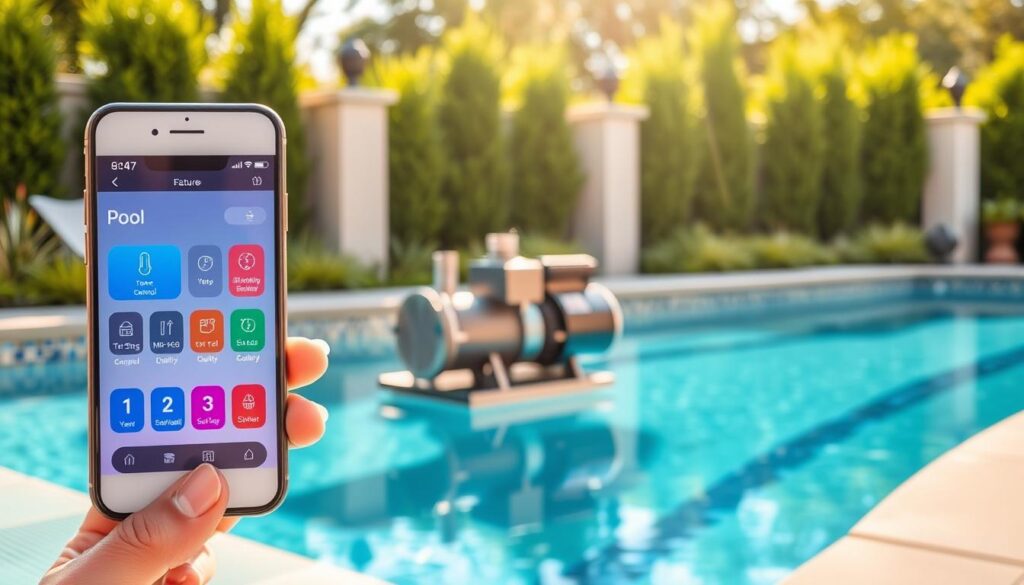
Voice assistants and safe use
Tuya SmartLife and major platforms commonly support remote schedules and Alexa/Google Home voice commands. We recommend voice for lamps, scenes and simple on/off tasks.
Keep critical motor commands behind app permissions to avoid unsafe rapid cycling. Pentair’s app emphasises full remote access, useful when we need monitoring from anywhere.
Entertaining near Menlyn Maine
For parties, set a lighting scene, time water features and add a one‑tap “party mode” that runs a short high‑speed circulation before guests arrive. This gives convenience and a reliable swimming window.
| Everyday automation | Benefit | Watch‑outs |
|---|---|---|
| Scheduled filtration | Energy savings & clarity | Avoid rapid on/off cycles |
| Holiday mode | Peace of mind | Check alerts frequency |
| Lighting scenes | Better entertaining | Secure access to scenes |
| Voice command | Best practice | |
| “Turn lights on” | Safe, user‑friendly | |
| “Start circulation” | Use app lockouts for safety | |
| “Run high speed” | Avoid spoken rapid changes; use scheduled bursts |
Water chemistry and equipment health: keeping the pool stable automatically – Pool pump automation and smart control setup
Consistent chemistry and timely alerts are the twin pillars of long equipment life and clear water.
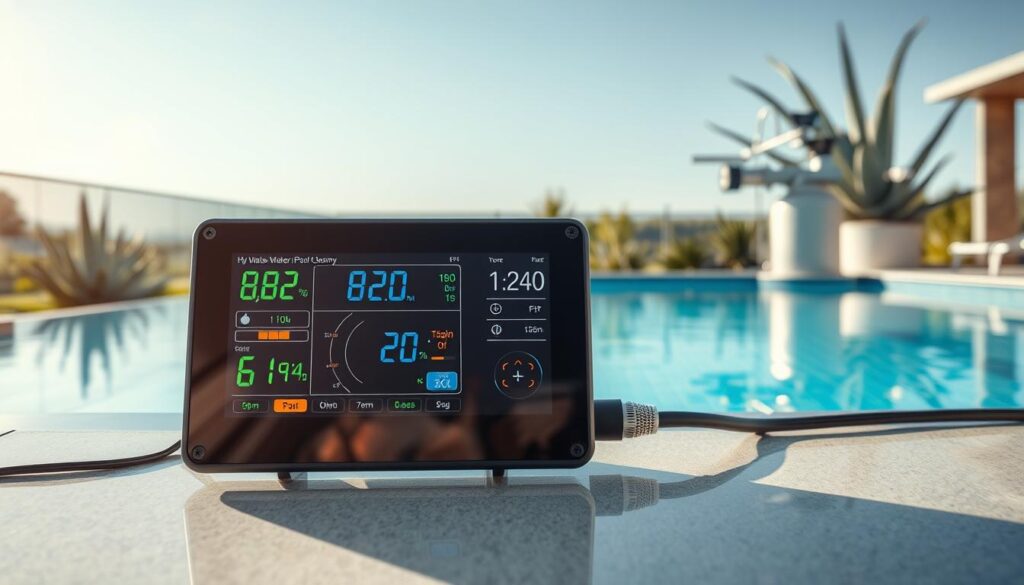
We use sensors to stop the common roller‑coaster swings that waste salt and chemicals. Better circulation and dosing logic keep levels steady so you add less reagent over a season.
Smart monitoring: sensors, dosing concepts and reducing chemical waste
Typical sensors measure free chlorine, pH, salt and temperature. Flow sensors and ORP probes add confidence for dosing decisions.
Why this helps: continuous reads let dosing run only when needed, cutting chemical waste and keeping water balanced with fewer shocks.
Protecting equipment: flow-aware logic, run-dry avoidance and proactive alerts
Flow-aware logic pauses heaters when flow drops and prevents motors from running dry. Alerts flag blocked skimmers or clogged baskets early.
These safeguards reduce mechanical wear and avoid costly failures in filters, heaters and other equipment.
Seasonal tweaks for Pretoria: winter circulation, wind-blown debris and heat management
In winter we reduce total run hours but keep daily circulation to prevent stagnation. During windy spells near the Union Buildings or Pretoria Botanical Gardens we add short high-speed bursts after peak gusts to clear fine dust.
In hot months we increase turnover during hottest hours and monitor salt and chlorine more often to avoid rapid chemistry swings.
Maintenance checklist by season (weekly, monthly, quarterly) for automated pools
| Interval | Weekly | Monthly | Quarterly |
|---|---|---|---|
| Visual checks | Skimmer socks, debris baskets | Inspect seals, cable glands | Full enclosure inspection |
| Chemistry | Test free chlorine & pH | Calibrate sensors, test salt | Lab check (if needed) |
| Equipment | Clear baskets, confirm flow | Check heater operation | Service motor bearings/contacts |
Sensor types and what they prevent
| Sensor | Measures | Prevents |
|---|---|---|
| Flow | Water movement | Heater damage, run‑dry faults |
| ORP / free chlorine | Sanitiser level | Over/under dosing, algae |
| pH | Acidity | Corrosion, ineffective sanitiser |
| Salt | Salinity | Cell damage, corrosion |
Automation feature → protects which equipment → common failure it prevents
| Feature | Protects | Prevents |
|---|---|---|
| Flow interlock | Heater, motor | Overheating, dry‑run |
| Runtime thresholds | Motor & bearing life | Continuous overload |
| Surge alerts | Electronics | Voltage‑spike damage |
| Chemistry lockouts | Salt cell | Cell burnout from wrong levels |
Local tip: after windy days near the Union Buildings or Pretoria Botanical Gardens fit a skimmer sock, add two 15‑minute high bursts later that evening and re‑test chemistry the next morning. Automation saves time, but visual checks still matter for long‑term pool care.
Pool pump automation and smart control setup: Conclusion
Start with a short audit and you can expect real energy savings and less maintenance.
Plan first: pick the right system for your yard, install it safely, then programme schedules that match Pretoria life. Good choices deliver clearer water, simpler pool management when you’re away and steadier chemistry with less waste.
Well‑matched equipment can cut energy use by up to 70% in ideal cases; a typical result is 30–40% savings depending on motor type, scheduling and how the automation is tuned.
Next steps: audit equipment, confirm Wi‑Fi at the equipment area, list desired features, shortlist systems and plan a compliant installation.
| Goal | First action | Measure over 30 days |
|---|---|---|
| Lower running cost | Log current runtime hours | Runtime hours & energy use |
| Better water | Check chemistry & clarity | Chemical usage & clarity notes |
| Reliable operation | Test alerts & Wi‑Fi | Nuisance trips or faults |
We can help with an assessment and a simple checklist so your upgrade delivers long‑term value without overcomplicating things.