
Arborist Services: Safe Palm Trimming and Shaping
Have you ever wondered whether Palm tree cleaning and trimming for a neat, safe garden in Pretoria requires surgical care or just a simple tidy-up? We are Handyman Pretoria, and we wrote this practical how-to guide to help with removal, shaping and safe tidy-ups for local gardens.

Cleaning means removing dead fronds, old flower and fruit stalks, plus loose debris. Trimming means selective pruning to improve safety, clearance and the long-term health of the plant.
Palms are unique: a single growing point can be badly harmed by over-pruning. That makes correct work vital for photosynthesis and for keeping green fronds that feed the specimen.
We will explain when DIY is sensible and when height, spines or falling fronds pose real risk. You’ll get a clear roadmap for timing, basic tools, the clock-face rule, species differences and aftercare so your garden stays tidy, natural-looking and safe – Contact Us
Pretoria palm care today: what to check before you cut – Palm tree cleaning and trimming
Unlike broad‑leaf trees, these singular plants store all new growth at one crown, so one bad cut can be fatal. We inspect before any work to protect the central growth point and the green fronds that feed the specimen.
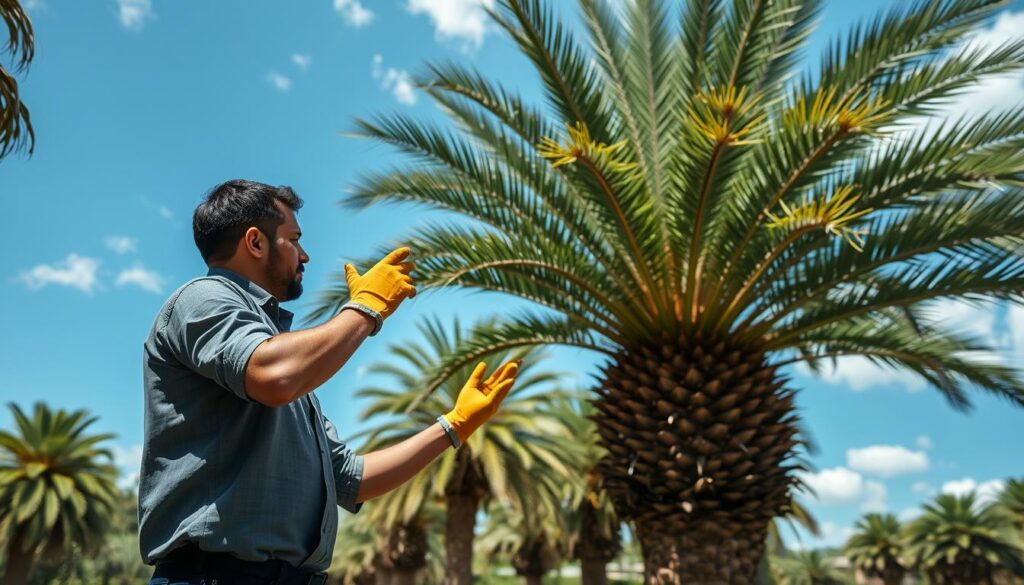
Why they differ from other trees
Each specimen has a single apical meristem. If that heart is damaged, new growth stops. That is why simple tree trimming methods do not apply here.
Quick pre‑trim checklist
- Canopy balance and new spear condition
- Drooping or weak leaves, discolouration or spotting
- Clear signs of pests or diseases
- Nearby power lines, height and footing risk
Site factors in Pretoria
Summer storms and Highveld wind can snap fronds and create hanging hazards. Dry winters slow recovery, so bad cuts may invite rot.
Where fronds become a safety issue
Prioritise safety around pools, over driveways and along walkways. We often see specimen placements near Menlyn, Brooklyn, Loftus Versfeld, the Union Buildings and the Pretoria National Botanical Gardens — so public safety matters.
If height, unstable ground or services raise the risk, stop and call a pro.
Palm tree cleaning and trimming: tools, safety gear, and preparation
Sharp, hygienic tools and proper PPE are the difference between neat work and lasting damage.
We bring a compact kit that lets us make clean cuts close to the base without tearing the fibre. Pruning shears, loppers, a pruning saw and a pole pruner form the core of our set.
Recommended tool kit for clean cuts
| Tool | Best for | Notes |
|---|---|---|
| Pruning shears | Small stems, fine shaping | Keep sharp |
| Loppers | Thicker frond stalks | Good leverage, neat cuts |
| Pruning saw | Thick frond bases | Clean blade profile |
| Pole pruner | Reach without a ladder | Reduces dangerous stretching |
Tool hygiene to limit disease spread between trees
We disinfect blades between specimens using diluted bleach or isopropyl alcohol to reduce disease and pests transfer. Sharp, clean blades help wounds seal and lower pest attraction.

Safety gear, safe access and prep
| Item | Why |
|---|---|
| Gloves | Protect hands from spines |
| Eye protection | Blocks fibres and dust |
| Hard hat | Stops overhead impact |
We follow a short prep process: clear the drop zone, protect nearby plants, plan frond lowering and decide disposal before the first cut.
| Pre-work safety checklist | Stop if… |
|---|---|
| Stable ladder, three points of contact | Windy, wet or unstable ground |
| No overreach; use pole tools | Fronds may fall into pools, cars or walkways |
When to trim palms in South Africa for the best recovery – Palm tree cleaning and trimming
Choosing the right season makes the difference between quick healing and long‑term decline.
For Pretoria we favour late spring to early summer. At that time the plants show active growth, which speeds wound closure and reduces the chance of disease.
Work around storm forecasts: avoid cutting just before heavy wind or rain. Fresh cuts that get battered can tear and stay wet, raising rot and infection risk.
Late spring to early summer as the ideal window for most palms
We schedule pruning and shaping in warm months so new growth restores canopy health quickly. Cosmetic shaping and major cuts are best saved for this window.
Why cold-season trimming can increase stress, rot, and infection risk
In Pretoria’s dry winters growth slows. Cuts take longer to seal, which raises stress and the chance of secondary infections. Remove dangerous dead fronds anytime for safety, but defer non‑urgent work.

| Season | Pretoria note | Priority |
|---|---|---|
| Late spring–early summer | Active growth; best healing | High – pruning, shaping |
| Mid-summer | Warm but avoid storms | Medium – minor work only |
| Autumn | Cooling; slower recovery | Low – limit cuts |
| Winter | Dry, slow healing; infection risk | Only safety removals |
| Weather go/no‑go checklist | Action | |
| High winds forecast | No – reschedule | |
| Heavy rain or wet surfaces | No – risk of tearing and rot | |
| Lightning risk | No – stop work immediately | |
| Dry calm day, after forecast clear | Go – ideal for pruning |
Aftercare: keep a steady supply of water without waterlogging. Avoid further trimming for a few months and watch spear and canopy colour for recovery signs. This reduces risk and supports healthy growth.
How to trim a palm tree correctly without over-pruning – Palm tree cleaning and trimming
Correct cuts keep energy flowing and prevent long-term decline. We only remove dead, dying, diseased or clearly damaged fronds. Leaving healthy green fronds preserves the plant’s energy and nutrients.

Spotting what to remove
Prioritise safety first. Remove brown dead fronds, then clearly dying or diseased material. Cut damaged fronds that risk falling on people or cars.
The clock‑face guide
Use the clock‑face rule: remove fronds below roughly 9 to 3 o’clock (or conservatively 10 to 2). This keeps a rounded canopy and prevents the “hurricane cut” look.
Cut placement and angle
Make cuts close to the trunk without gouging it. Cut at a slight angle so water does not pool on the wound. Clean, sharp cuts help avoid pests and diseases.
Flower and fruit stalks
Remove spent flower stalks and heavy fruit stalks for safety and neatness. If stems still feed seed development, leave them a short while to avoid wasting energy.
Our step-by-step process
- Assess canopy; mark fronds to keep or remove.
- Clear the drop zone and protect nearby plants.
- Disinfect blades between cuts.
- Make controlled cuts, lower fronds safely.
- Tidy debris and check balance from different angles.
| Fronds to cut | Fronds to keep | Reason |
|---|---|---|
| Brown, brittle frond | Green frond with new spear | Maintain photosynthesis |
| Diseased spotted frond | Yellowing old frond still feeding | Avoid energy loss |
| Damaged safety risk | Functional frond supporting canopy | Balance safety and nutrients |
| Mistake | Likely damage | Prevention |
| Removing many green fronds | Reduced photosynthesis, slow growth | Keep most green fronds |
| Gouging trunk | Entry for pests and diseases | Cut close but flush |
| Tearing rather than cutting | Longer wounds, rot risk | Use sharp saws/shears |
| Clock-face quick reference | Action | |
| Below 9–3 | Candidate for removal | |
| Between 10–2 | Conservative removal | |
| Above 2–10 | Keep for canopy health | |
| Cut-angle & tool | Best choice | Why |
| Small stalks | Pruning shears | Clean, close cuts |
| Thick bases | Pruning saw | Avoid tearing |
| High reach | Pole pruner | Reduces ladder risk |
Signs of over‑trimming: sparse canopy, drooping new growth, trunk sunburn, persistent yellowing and slow frond replacement. If you spot these, pause and allow recovery before further work.
Species-based trimming in Pretoria: feather, fan, clustering, and self-cleaning palms – Palm tree cleaning and trimming
Identifying the species in your garden directs how we cut, what we leave, and when we act.

Feather specimens: Queen and Date focus points
Feather varieties need older hanging fronds removed first. We remove only brown fronds close to the trunk to protect new growth.
Safety note: wear long sleeves and use careful tool control near the frond base to avoid spine injuries. Very tall specimens or heavy fronds are best handled by professionals.
Fan varieties: skirts, fire load and a tidy finish
Fans often form skirts that shield the trunk but raise fire risk in dry Highveld months.
We decide case by case: keep the skirt for shelter or remove it to reduce fuel load near homes, pools and entertainment areas.
Clustering species: thin for airflow
Clustering specimens benefit from selective thinning of interior dead material.
This improves airflow, lowers humid pockets that attract pests and diseases, and keeps the natural clump shape.
Self-cleaning varieties: hands-off with safety checks
Self-cleaning types shed fronds naturally, yet we still check for stuck dead material and hazardous hanging stalks.
Remove only items that pose a risk near driveways, play areas or narrow passages.
| Category | Trim frequency | Key cautions | Healthy finish |
|---|---|---|---|
| Feather (Queen, Date) | Annual | Spine bases, frond weight | Rounded canopy, few brown fronds |
| Fan | Every 1–2 years | Skirt fire load, trunk damage | Neat skirt decision, no burnt debris |
| Clustering | Annual or as needed | Avoid over-thinning; balance clump | Open centre, good airflow |
| Self-cleaning | As required for safety | Check for lodged debris | No hazardous hanging fronds |
Palm tree cleaning and trimming: Conclusion
Healthy canopies depend on restraint as much as on skill. Good care means removing what the plant sheds naturally; do not strip green fronds that feed the specimen. Keep cuts clean and close to the trunk; use sharp, hygienic tools to lower infection risk.
Plan most work for late spring to early summer in Pretoria. Reserve winter for urgent safety removals only. Inspect first; decide; disinfect blades; cut correctly; tidy debris to reduce hazards.
Watch for warning signs: the “hurricane cut”, hurried ladder work, or poor tool hygiene. These lead to slow recovery and greater safety risks.
Use the seasonal and frond reference tables as quick guides. For local, practical help, trust Handyman Pretoria — we stand by this process and local advice.