
Smooth Sliding: Heavy Duty Rack and Rail Upgrades
Gate rack and rail replacement in Pretoria, Gauteng is the quickest way to fix the problem when you pull into your driveway and a jammed gate stops you. That sudden delay feels unsafe and frustrating.
Here at Handyman Pretoria we explain, in plain terms, what a rack-and-pinion plus track system means: teeth on a bar, a moving wheel carriage and a guiding track that work together in most automatic sliding gate setups.
In this short guide we will help you spot early warning signs, decide repair versus full swap, learn about common track types and see what correct installation looks like.
Why it matters: a smooth-running entrance reduces motor strain, prevents failures and keeps your security reliable during heavy commuter cycles around Pretoria neighbourhoods.
Our approach: assessment → correct parts → correct alignment → testing, practical steps we follow across busy routes and frequent open/close sites – Contact Us
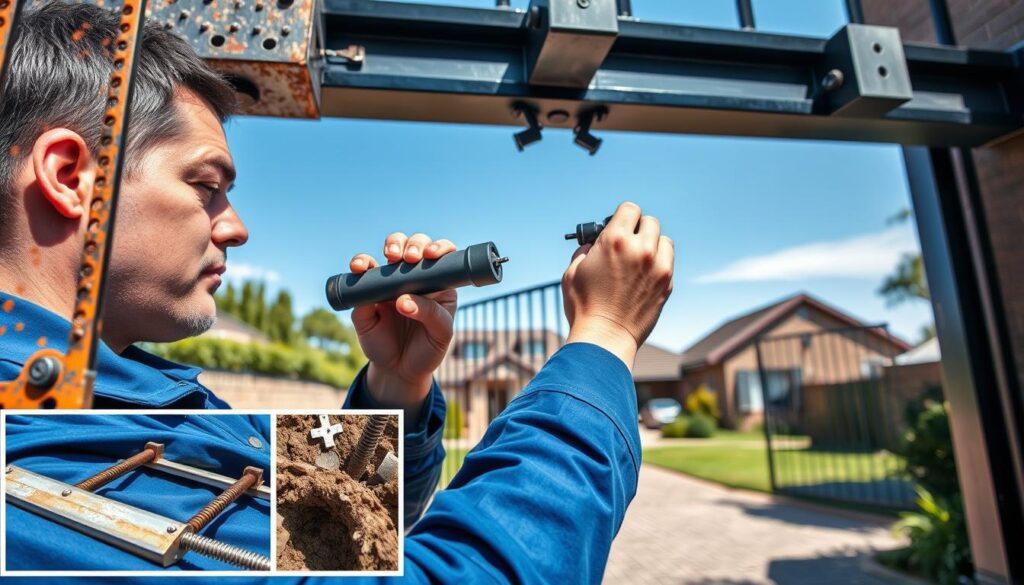
| Problem | Likely area | Why it matters |
| Jammed movement | Worn track or wheels | Stops access; strains motor |
| Noisy travel | Loose teeth or debris | Security risk; faster wear |
Sticky sliding gates in Pretoria: what’s really causing the problem – Gate rack and rail replacement
A sluggish sliding opener usually has a simple mechanical cause, not a failed motor, once we inspect it.
Worn gear rack teeth lead to jerky movement as the pinion slips or jumps. Bent rails cause misalignment so wheels bind and the gate lifts off its line. These issues raise friction, which looks like an electrical fault but is actually resistance in the drive system.
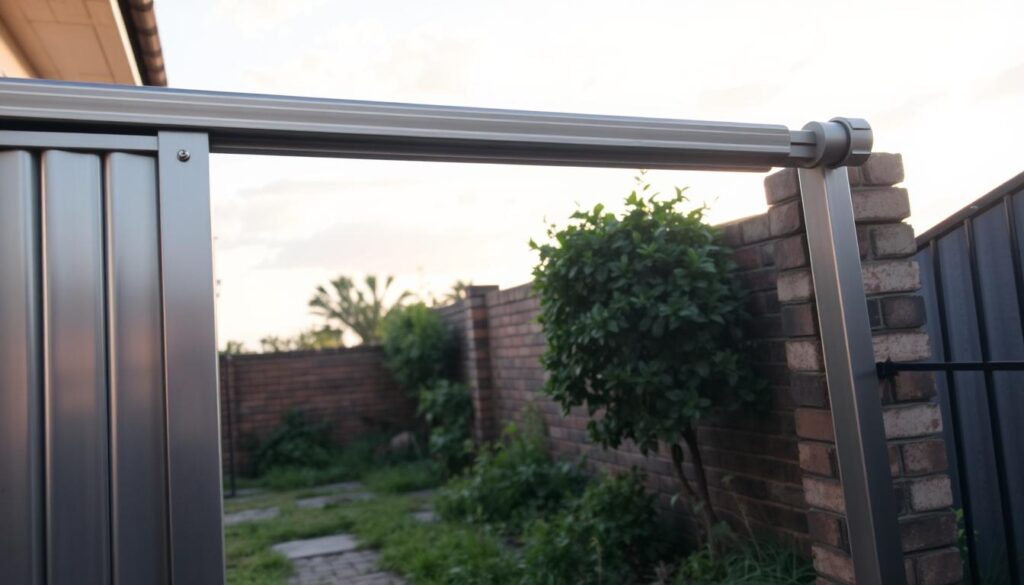
How worn teeth, bent runs and alignment affect gate operation
Poor alignment makes wheels bind and the pinion climb the rack. The operator strains, shortening motor life and creating intermittent stops.
Pretoria context: dust, runoff and corrosion hotspots
In Pretoria CBD and Marabastad grit and dust act like an abrasive paste on wheels and rails. Where storm-water pools over the line, steel corrodes faster in south africa conditions.
When the motor seems to be the issue
Often the motor hums but the gate won’t move because engagement is poor between pinion and rack or the gate is binding on a damaged rail. We always reduce resistance first, then set gate motor limits for reliable operation.
| Symptom | Most likely cause | Quick homeowner check (safe) | Why it matters |
|---|---|---|---|
| Sticky movement | Worn gear rack teeth | Look for missing teeth and grit | Jerky travel; motor strain |
| Intermittent stopping | Bent rail or misalignment | Visual straightness along the run | Lift off track; security gate risk |
| Noisy travel | Debris or loose engagement | Clear grit and test slow open/close | Faster wear; reduced life |
Signs your sliding gate needs attention before it fails – Gate rack and rail replacement
Small noises and short hesitations often signal a problem long before the gate stops moving. Spotting these early saves time, cost and keeps your security reliable in dusty Pretoria suburbs or areas prone to rain run-off.
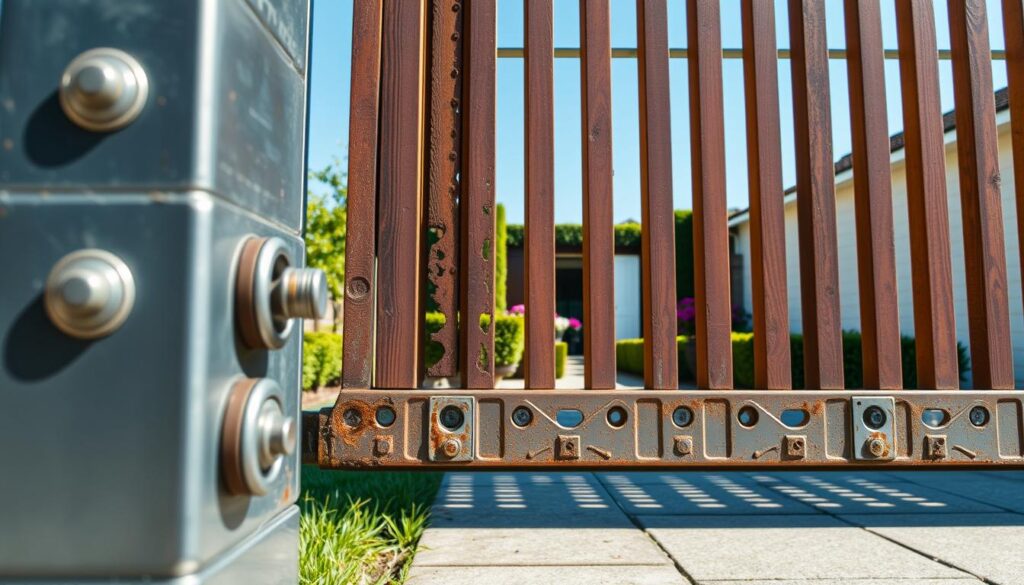
Jerky or jumping movement from worn gear teeth
When teeth wear, the gear can skip under load and produce a sudden jolt. This skipping is most obvious at start-up or when the gate meets resistance.
If ignored, the pinion will suffer faster wear and the issue spreads along the drive line.
Noisy operation: grinding, squeaking and scraping sounds
Grinding usually means metal-on-metal contact. Squeaks point to dry or worn wheels. Scraping often signals deformation or trapped debris on the track line.
Rust and corrosion on steel components
Surface rust looks minor, but pitting changes contact faces and increases friction. In low-lying sections where storm water pools, corrosion accelerates and alters alignment.
Misalignment symptoms: lifting, binding and drifting off track
Watch for the gate climbing during travel, rubbing a guide, binding at the same spot or slowly drifting off line. Any of these signs indicates alignment or base problems.
| Sound / behaviour | Likely component | Risk if ignored | Typical remedy |
|---|---|---|---|
| Skipping / jerky movement | Worn teeth or pinion | Gear damage; motor strain | Adjust engagement / replace worn section |
| Grinding | Metal contact (rail or wheel) | Faster wear; noise | Clear debris / align or repair track |
| Squeaking / rattling | Dry wheels or bearings | Reduced smooth operation | Lubricate / replace wheels |
| Rust / pitting | Steel sections | Loss of alignment; higher friction | Replace affected sections; treat steel |
Safety note: a gate that lifts, jumps or derails can leave an opening in your perimeter and may damage the operator unit. We recommend early checks and prompt repair to avoid emergency failures.
Gate rack and rail replacement: decide whether to repair, adjust or replace
Deciding whether to adjust, repair or fully renew worn drive components often saves time and money. We start with a quick walk-round to check wear, alignment and foundation stability before recommending work.
Repair vs replacement checklist for racks, rails, wheels and foundations
When adjust is enough: minor alignment drift, small wheel play or dirt in the track causing binding.
When repair is viable: localised damaged rack section, single worn wheel or isolated corrosion that can be cut out and replaced.
When full renewal is best: bent rail runs, widespread pitting, repeated wheel failures or shifting motor base that undermines limits.
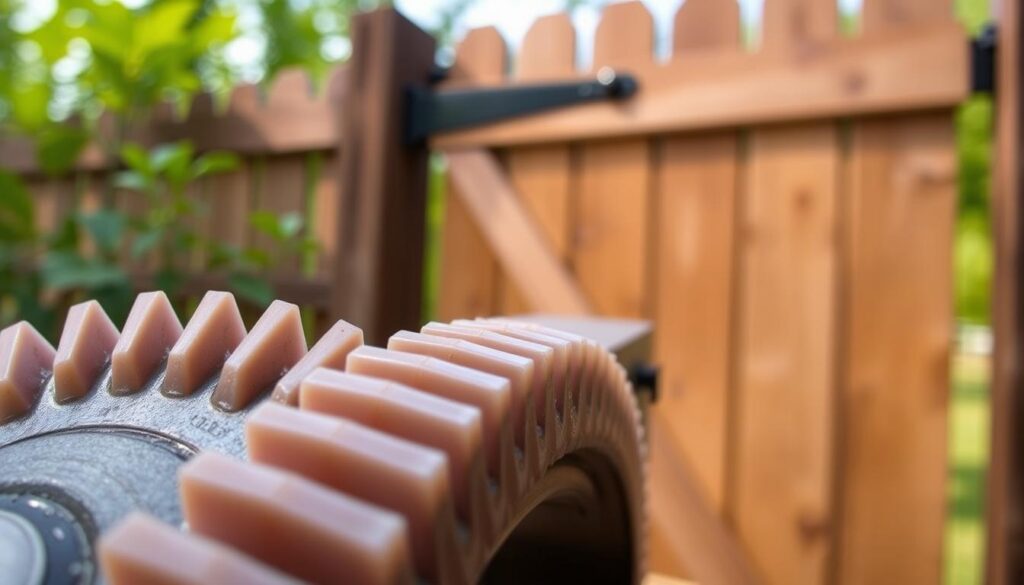
Choosing between nylon gear rack and steel rack for your driveway gate
Nylon gear gives quieter operation and less wear on the pinion, ideal for low-to-medium weight domestic bays with frequent cycles. Steel is stronger for heavier spans and high load use but can be noisier and needs corrosion protection in wet areas.
Track systems explained: V-track, U-track and cantilever options
V-track and U-track guide wheels along a ground line; V-profile suits residential use while U-profile handles higher loads. Cantilever lifts the load off the ground and is best where debris or pooled water would foul a ground track.
| Track type | Best application | Load capacity (kg) | Maintenance |
|---|---|---|---|
| V-track | Residential driveways | up to 400kg | Low |
| U-track | Commercial runs | up to 800kg | Medium |
| Cantilever | Heavy-duty / debris-prone sites | up to 1200kg | Low |
| Component | Typical fault | Safe temporary measure | Best long-term option |
| Racks | Missing teeth | Limit motors and run slowly | Replace affected section |
| Rails | Bent run | Realign stops; reduce load | Full rail renewal |
| Wheels | Flat spots | Fit spare wheel | Replace wheel set |
Quote-ready information to gather before we visit
- Approximate gate weight and opening span
- Typical daily usage cycles
- Automation brand or operator family
- Existing track type and site drainage notes
- Whether the gate is derailing or skipping
Tools, parts and prep for a smoother, safer installation – Gate rack and rail replacement
A reliable install starts with the right parts, correct measurements and a clear drainage plan. We prepare tools, spares and a safety plan before any work begins.
We check core components so the whole system will run quietly and last for years. This reduces repeat visits and protects the operator unit.

Core components we inspect
- Rack condition: wear patterns, missing teeth and straightness.
- Pinion wear: tooth contact and uneven loading.
- Rail straightness: alignment, fixings and settlement signs.
- Wheel profile & bearings: correct diameter, radius and free spin.
- End-stops & guide rollers: secure, not bent or loose.
- Motor mounting: base stability and level.
Surface-mount issues and wheel sizing
Surface-mounted rails often fail due to impact damage, poor fixing spacing and corrosion under fasteners. Concrete settlement creates uneven runs that make wheels bump or chatter.
Getting wheel sizing and profile right matters. The wrong wheel causes bumps, noise and faster component wear even if the line looks straight.
“On one long-standing fault we fitted a 16mm mild steel round bar with radius-cut wheels. The bumps vanished and the system ran much quieter.”
Drainage and run-off planning
Puddles on the line accelerate corrosion and shorten wheel life. We check storm-water flow and adjust fixing positions so run-off is not trapped by the rail base.
| Component | What to look for | Common wear pattern | Typical outcome |
|---|---|---|---|
| Rack | Missing or uneven teeth | Tooth thinning on one side | Replace worn section |
| Pinion | Uneven contact marks | Pitted faces; asymmetric wear | Adjust engagement / replace |
| Rail | Bends, loose fixings, rust | Localised deformation | Realign or renew |
| Wheels | Flat spots, wrong radius | Noise and vibration | Replace with matched profile |
| Prep task | Why it matters | What it prevents | |
| Clear debris | Removes abrasive grit | Wear and binding | |
| Check levels | Ensures straight run | Skipping and motor strain | |
| Mark fixing points | Correct spacing for expansion | Fixing pull-out and uneven rail |
Safety note: we isolate power and secure the moving parts before removal or fitting. This keeps the team safe and protects the security system during works.
How we replace the rack and rail for reliable automatic gate operation – Gate rack and rail replacement
We start every job by mapping the run, checking levels, and marking solid end-stops. This survey sets the alignment reference and shows where drainage will affect the new line.

Site assessment and safe isolation
First we measure span, check level along the full travel and verify the end-stops are secure. We confirm the panel does not twist or rack under manual movement.
Safe isolation: power off, motor disengaged, and the gate moved under controlled lift devices to avoid runaways or pinch risks.
Removal and careful extraction
Damaged sections are removed with jigs that protect driveway edges and keep the original alignment datum intact. Worn strips are lifted clear without disturbing foundations.
New installation and fitting
We lay the new rail true to the marked line, set correct fixing centres and keep storm-water flow clear so no puddles form along the base.
Fitting the rack: teeth spacing and mesh are checked across the travel so the pinion engages consistently and does not climb or skip.
Motor set-up and wiring
We reinstall the motor to manufacturer spec, set backlash, force limits and travel stops. Final rewiring removes redundant joins, improving reliability and fault-finding later.
Pretoria considerations
Near the Union Buildings we account for sloped drives and run-off. Around Loftus Versfeld we design for high cycle loads on event days. In Menlyn precinct we often fit quieter nylon gear options for mixed-use sites.
| Mistake | Immediate symptom | Long-term damage | Prevention |
|---|---|---|---|
| Poor straightness | Noise and vibration | Uneven wear; motor strain | Correct levelling and reference datum |
| Incorrect tooth mesh | Skipping under load | Tooth breakage; pinion damage | Consistent spacing and engagement checks |
| Poor fixings / drainage | Binding at wet spots | Corrosion and settlement | Proper fixing spacing and clear run-off |
| Bad wiring / redundant joins | Intermittent faults | False trips; operator failure | Clean rewiring and labelled terminals |
Testing, optimisation and maintenance to keep your gate running smoothly – Gate rack and rail replacement
A concise test routine tells us if small tweaks will prevent future faults and emergency call-outs.
Post-install testing: smooth travel, quiet running and consistent closing force
We check that the system moves smoothly by hand when disengaged. Under power it should run quietly and stop gently at the end-stops without jolting.
Performance optimisation: alignment tweaks and rack-to-pinion engagement
Small alignment adjustments and precise engagement reduce skipping and noise. Correct mesh extends motor life and lowers service visits over time.
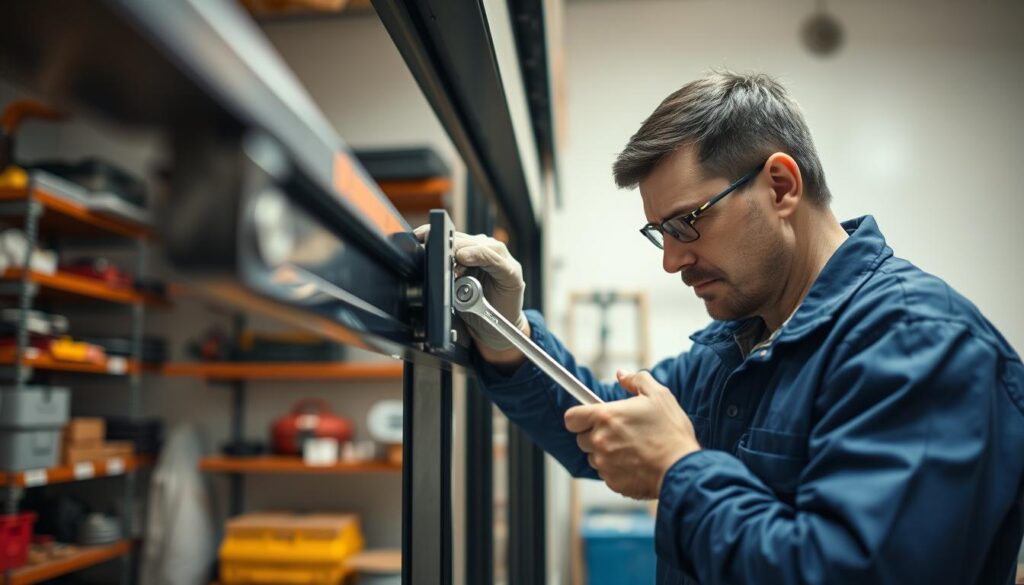
Preventative maintenance schedule for South African conditions
South Africa climates speed corrosion and dirt build-up, so regular checks matter. A simple routine prevents emergency faults and gives long-term peace of mind.
| Interval | What we check | Why it matters | |
|---|---|---|---|
| Weekly | Clear debris from the track line; visual wheel check | Prevents binding and abrasive wear | |
| Monthly | Check fasteners, test stops, inspect for early corrosion | Catches loosening and pitting before failure | |
| Seasonal | Deep clean, lubrication, alignment review | Addresses run-off, dust and temperature effects | |
| Maintenance task | DIY-friendly? | Tools needed | When to call us |
| Debris removal | Yes | Brush, cloth | If obstruction recurs |
| Fastener check | Yes | Spanner, torque wrench | If bolts strip or anchor fails |
| Alignment tweak | No | Level, dial indicator | Any skipping or uneven wear |
Budget planning: costs are driven by materials, track type, gate weight, site drainage and whether the work is an emergency or planned. A small alignment tweak often costs far less than replacing a bent run, which is why assessment saves time and money.
Consistent maintenance reduces breakdowns, protects your security system and delivers lasting peace of mind for years.
Gate rack and rail replacement: Conclusion
Early attention to worn teeth or a bent run saves you emergency call-outs and unexpected lockouts. Sticky or noisy gate movement usually points to the rack, wheels, rails or alignment rather than the motor.
Practical path: diagnose symptoms, decide adjust/repair/replace, choose the right option (steel or nylon gear rack), install with correct alignment and drainage, then test and maintain.
Pretoria dust, run-off and corrosion-prone spots demand local know-how, especially near the CBD corridor. Acting early to replace a bent section or worn strip avoids sudden failures and improves security.
| Your goal | What to prioritise | Expected result |
|---|---|---|
| Reliable access | Correct mesh, alignment | Quiet, smooth running |
| Fewer call-outs | Timely replacement, drainage | Longer life for components |
Handyman Pretoria supports Pretoria homeowners and businesses with standards-based sliding gate fixes. We focus on durable work, not quick patches, so your property and driveway remain secure.