
Premium Organic Compost and Mulch Delivery Team
Looking to make your outdoor beds last through Pretoria’s heat and sudden downpours, Garden mulch supply is an easy way to conserve water and improve soil health while we act as your local, reliable partner.
Handyman Pretoria leads the local offering, and we provide bulk loose loads, convenient bagged options and add-on compost and soil blends for planting or top-dressing.
On this page you can choose product type, work out cubic metres, confirm offload access and book a suitable delivery window. We keep each step simple so trades, estates and homeowners can plan with confidence.
Pretoria’s sun and seasonal rains make mulching a sensible, water-wise investment — whether you’re tending beds near Menlyn Maine or refreshing borders closer to the Union Buildings.
Ready to proceed? Request a quote with your area size, preferred product and desired depth and we’ll propose a practical plan and time slot – Contact Us
Bulk mulch, compost and soil delivery across Pretoria – Garden mulch supply
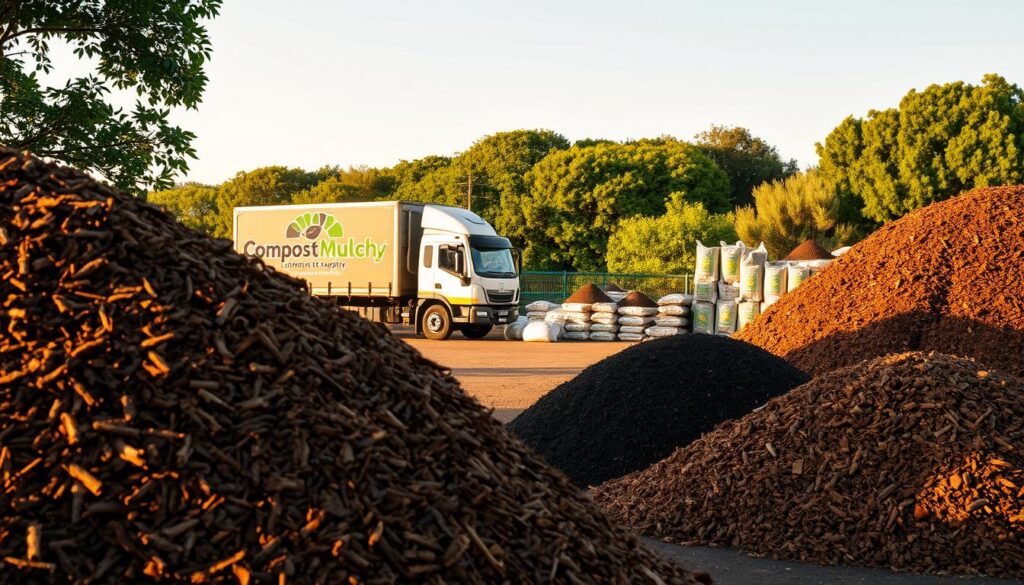
We deliver bulk loose loads across Pretoria, making site offloads quick and straightforward. Our route planning focuses on key suburbs so we move product efficiently and reliably.
We regularly service Brooklyn, Hatfield, Menlyn Maine and Lynnwood. We also handle jobs near the Union Buildings, Loftus Versfeld and the Pretoria National Botanical Garden, which helps local projects stay on schedule.

How bulk delivery works
Bulk delivery means a loose load arrives in a tipper-style small truck and is tipped where the driver can safely manoeuvre. This saves time and avoids multiple small drop-offs.
Quick checklist before booking
- Confirm gate width and driveway slope.
- Check turning space for a small truck.
- Identify a clear, level spot to tip the load.
- Tell us if estate rules or landscaper schedules affect timing.
Tip: We can align delivery timing with landscapers, weekend projects or estate windows to suit your plan.
Local planning and suggestion
We suggest adding a delivery zones table on the page to list suburbs and typical lead-time bands. That helps customers in Pretoria estimate waits and plan their projects with confidence.
Garden mulch supply
For practical buyers, we explain how natural coverings work and when bagged options suit small sites.
Organic options that benefit Pretoria soils
Organic materials break down and add nutrients while supporting beneficial soil life. This improves structure and helps retain moisture through hot spells and sudden rains.
Common product families include pine-based pieces, bark varieties and compost. Pine gives a neat finish; bark lasts longer; compost acts as a nutrient-rich top dressing.

When bagged makes more sense than loose loads
Use bags when access is tight, beds are small, or you need a tidy staged project. Bags suit courtyards and planting around paved areas.
Choose loose loads for larger verges, estates or full-bed refreshes. Ordering by cubic metres is the most accurate way to match coverage and avoid repeat trips.
What to expect on delivery day
Loose-load deliveries arrive in a tipper-style truck within an agreed window. We confirm a safe tip location, then the driver leaves a neat mound to spread.
Tip: Clear the offload area beforehand and check gate width so the driver can manoeuvre safely.
| Option | Best for | Handling | Typical project size | Clean-up effort |
|---|---|---|---|---|
| Bagged | Small beds, tight access, tidy finishes | Easy to carry, single-person handling | Up to 5 m² | Low – minimal packaging to remove |
| Loose (per cubic m) | Large beds, verges, estate projects | Tipper offload; spread required | 5 m² and above | Medium – spreading and levelling needed |
| Bulk with compost | Soil improvement projects, planting prep | Delivered loose; may need mixing in | Large-scale renovations | Higher – mixing and incorporation |
Mulch types we supply and what each one is best for – Garden mulch supply
From decorative bark to practical pine chips and nutrient-rich compost, our products suit typical Pretoria conditions.

Bark for long-lasting moisture control and neat beds
Bark gives a tidy, finished look to front beds and visible borders. It breaks down slowly, so it stays in place longer and needs topping up less often.
We avoid treated or contaminated material and only offer clean bark suited to formal borders and visual focal points.
Rough-cut pine for shrubs, trees, paths and driveways
Rough-cut pine is a by-product of pole-making. Mixed-size pieces mat down well and are ideal under shrubs and around trees.
It also performs on pathways and driveways where a matted layer helps stability. Note: it can be shardy and is not recommended for play areas.
Wood-chip pine for a more uniform finish
Wood-chip pine offers a cleaner, more uniform look while keeping the benefits of pine. It has fewer sharp shards and suits visible beds where a neat finish matters.
Compost as “black gold” for planting and soil improvement
Compost is decomposed organic matter — nutrient-dense and excellent for planting or building soil structure. It boosts microbes and mycelia but breaks down faster, so top-ups are needed more often.
“We only deliver uncontaminated, untreated materials to protect plant health and soil life.”
| Product | Best use | Visual finish | Breakdown speed | Top-up frequency |
|---|---|---|---|---|
| Bark | Front beds, visible borders | Neat, formal | Slow | Low |
| Rough-cut pine | Shrubs, trees, paths, driveways | Rustic, matted | Medium | Medium |
| Wood-chip pine | Visible beds needing pine look | Uniform, clean | Medium | Medium |
| Compost | Planting, soil improvement | Dark, loamy | Fast | High |
Why mulching works in Pretoria’s heat and seasonal rains – Garden mulch supply
Pretoria’s long hot spells and sudden heavy rains create two clear challenges: drying and erosion. We use a practical, local approach that helps retain moisture, protect roots and reduce routine maintenance.

Holding moisture and cutting evaporation
A surface layer slows water loss so soil stays damp longer between watering cycles. That conserves water and makes daily care more forgiving during dry stretches.
Regulating temperature to protect roots
Layers buffer extreme swings in temperature. Roots face less stress on peak summer days, which keeps young plants healthier through heatwaves.
Suppressing weeds and lowering maintenance
Mulch reduces light at the soil surface so fewer weed seeds germinate. That means less hand-weeding and less disturbance to established planting.
Improving soil structure and fertility
As organic material breaks down, it adds organic matter and encourages beneficial soil life. Over time this builds better structure and fertility for stronger growth.
Reducing erosion in heavy rain
During storms a protective layer lessens splash, crusting and runoff. This is valuable on slopes, verges and newly prepped beds where bare ground would wash away.
| Problem | What it does | Best type |
|---|---|---|
| Heat & evaporation | Shades soil and reduces moisture loss | Pine chips or bark |
| Weed growth | Limits seed germination and saves time | Clean compost top-dress or wood-chip |
| Erosion from heavy rain | Absorbs impact and reduces runoff | Bark or mixed organic blend |
Bulk quantities explained: cubic metres, coverage and depth – Garden mulch supply
Knowing the real-world size of a cubic metre helps you avoid under- or over-ordering. We break the maths down so homeowners and landscapers can plan quickly and accurately.
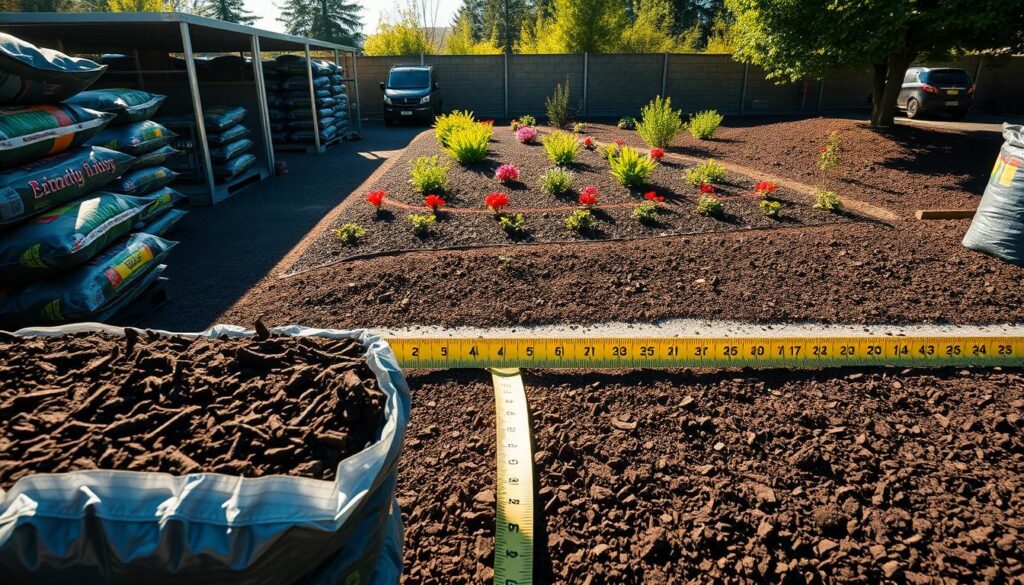
What one cubic metre looks like
1 cubic metre = 1,000 litres. That’s roughly four standard 250‑litre wheelie bins filled to the top. Visualising this saves surprises on delivery day.
Coverage at common depths
Most installations use 50 mm or 100 mm depth. At 50 mm, 1 m³ covers about 20 m². At 100 mm, 1 m³ covers about 10 m².
| Depth (mm) | Coverage per 1 m³ (m²) | Typical use case |
|---|---|---|
| 50 | 20 | Topping up beds, light coverage |
| 75 | 13 | Moderate suppression and moisture retention |
| 100 | 10 | New beds, strong weed suppression |
Quick measuring tips
Measure length × width for rectangles. For odd shapes, split into rectangles and add the areas.
For circles, use diameter and approximate visually to choose a sensible size. Always measure before ordering to avoid waste or shortfalls.
| Area type | Measuring tip | Common depth range (mm) |
|---|---|---|
| Beds | Length × width or split into simple shapes | 50–100 |
| Verges | Measure a typical strip width and multiply by length | 50–75 |
| Pathways | Measure path width × length; allow extra for edges | 50–75 |
Choosing the right product for your plants and garden areas – Garden mulch supply
A simple choice of product can protect young roots, feed vegetables and create stable walkways with minimal effort. We aim to keep recommendations practical so you get predictable results without over‑promising.

Best choices for vegetable beds, flowers and young plants
For edible beds and young plants we recommend using compost as the primary top dressing. Compost adds nutrients and boosts microbial life, so it supports growth without tying up nitrogen.
Avoid fresh woodier products directly against root zones. As wood breaks down it can temporarily bind nitrogen and slow early growth.
Best choices for trees, shrubs, borders and indigenous landscaping
For established trees and shrubs, choose bark or cleaned chip blends as a surface layer. These reduce evaporation and keep beds looking neat while protecting roots.
Keep a small gap at the stem to prevent rot, and consider a light soil top‑up if planting areas need improvement.
Paths and driveways: creating a stable, matted layer underfoot
Rough‑cut pine is ideal for informal paths and driveways. It mats down well and forms a stable walking surface that does not give way easily.
If you love the look of chips near feeding plants, boost the soil first with organic amendments such as poultry manure or compost. Then use the chips as a surface layer only.
| Area | Recommended product | Why it works | Notes / cautions |
|---|---|---|---|
| Vegetable bed / flowers | Compost | Feeds soil and promotes microbes | Avoid fresh wood near roots; top‑dress not mix heavy wood |
| Tree ring / borders | Bark or clean chip | Reduces evaporation and neat finish | Leave gap at trunk; replenish less often |
| Path / driveway | Rough‑cut pine | Mats for stability and low displacement | Not for play areas; can be shardier |
How to apply mulch for the best results – Garden mulch supply
Certain steps make installation reliable and long‑lasting. Small changes in depth and spacing around stems give big gains for plant health and water efficiency.
Correct depth and spacing around stems to avoid rot
Keep a clear gap around trunks and crowns. Pull material back 50–100 mm to allow airflow and reduce rot risk.
Make the layer thicker on bare soil (75–100 mm) and thinner near stems (25–50 mm). This protects roots while conserving moisture.
Top-dressing vs mixing: when compost can be worked into soil
Compost can be mixed lightly into the top 50–100 mm of soil when preparing beds. It also works well as a top‑dress to feed microbes.
By contrast, pine-based products must remain as a surface layer and not be worked deep into the soil.
Seasonal timing for Pretoria gardens
Apply before peak summer to cut evaporation. After heavy rains, check for displacement and top up thin areas. Refresh layers annually as they break down.

| Do | Don’t | Why it matters |
|---|---|---|
| Keep off stems and crowns | Pile material against trunks | Prevents rot and pest harbouring |
| Maintain correct depth | Use a one-size depth everywhere | Protects roots and ensures water retention |
| Use compost to enrich soil | Mix wood chips deep into beds | Compost feeds microbes; wood ties up nitrogen |
Watering note: Mulch aids moisture retention but does not replace deep watering for new trees and shrubs. We still recommend regular deep soakings during establishment.
Important considerations: what to avoid in mulch – Garden mulch supply
Quality control starts long before a truck arrives — it begins with what we refuse to take onto our site.
We focus on clean, organic loads suitable for homes, schools and commercial landscapes. Our aim is consistent, safe materials that protect roots and improve soil structure.
Why treated timber, dyes and contaminated loads are excluded
We avoid treated timber and dyed materials because chemical residues can linger in the soil and affect plant health.
Contaminants such as plastic fragments, rubble or mixed waste spoil the finish and create future cleanup issues.
Tree species and materials we do not use
Some woods release natural compounds that inhibit growth. We do not accept material from:
- Black walnut (Juglans nigra)
- Tree of heaven (Ailanthus altissima)
- Magnolia family (Magnoliaceae)
- Eucalypts (gum trees)
Keeping loads seed-free and free of plastic
Seed-free loads cut down on surprise weeds and reduce maintenance after spreading.
We screen for visible seed heads and remove any material that contains obvious plastics or non-organic fragments.
“We only accept clean, uncontaminated loads to protect plant health and long-term performance.”
| Quality check | Why it matters | Pass / Fail |
|---|---|---|
| Clean load | Protects soil and plants | Pass required |
| No dye or treated timber | Avoid chemical residues | Pass required |
| No visible plastic | Prevents litter and microplastics | Pass required |
| Consistent particle size | Better finish and even breakdown | Pass preferred |
Compost and soil combinations for healthier beds – Garden mulch supply
Strong planting beds rely on a simple rhythm: enrich, protect, repeat. We favour realistic steps that build structure and encourage life in the topsoil over seasons.
Using compost to boost beneficial soil organisms and earthworm activity
Compost feeds microbes, mycelia and earthworms that turn organic matter into plant-available nutrients. This living activity improves drainage and root access in compacted patches.
Use compost as a top-dress on established beds to feed the surface life without disturbing roots. For new beds, mix compost into the top 100 mm to improve texture and water retention.
Building soil organic matter over time for stronger plant performance
Organic matter accumulates with repeated applications. We recommend an annual top-up of compost and a protective surface layer to slow loss and protect the investment.
Practical combinations we suggest:
- Top-dress established beds with compost, then cover with a clean surface layer to reduce evaporation.
- Mix compost into new bed preparation and finish with a protective surface to keep nutrients in place.
- For sandy or compacted spots, increase compost rates and repeat annually until texture improves.
“Compost supports a living soil system — it does more than feed plants.”
| Goal | Recommended combination | When to apply |
|---|---|---|
| Improve texture | Compost mixed into top 100 mm + surface cover | When preparing beds or after heavy works |
| Boost fertility | Compost top-dress every season | Early spring and late autumn |
| Prep for planting | Higher compost mix + light surface layer | Two to four weeks before planting |
Note: compost decomposes faster than bark or chip options, so topping up is part of a simple seasonal routine. Ordering compost and other products together often saves time and keeps projects moving with a single delivery.
Delivery options and what influences lead times – Garden mulch supply
We plan each drop so your project gets the right volume when you need it. Our choices balance speed and access. That keeps work on track across Pretoria and surrounding suburbs.
Delivery options range from loose-load tipping for larger, bulk orders to staged, smaller drop-offs where access is tight. Loose tipping is fast and cost-effective when a small truck can reach a clear tip spot.
Access factors that affect lead times include narrow driveways, steep slopes, estate security checks, limited turning circles and the need to protect paving. Each of these can add time for planning or require a staged drop.
How we plan loads: we match cubic volume to vehicle capacity, group nearby jobs to reduce trips, and schedule by size so tipping is efficient and predictable.
Seasonal scheduling in Gauteng
Demand rises before summer and during spring landscaping bursts. Post-storm clean-up periods also create short lead-time windows. We advise booking early for peak seasons.
| Item | Why it matters | Customer action |
|---|---|---|
| Access width | Determines truck approach | Measure gate/drive and tell us |
| Tip spot | Safe place to leave the load | Identify a level area and clear obstructions |
| Ground protection | Prevents paving damage | Lay boards or tell us to bring protection |
We’ll confirm practical details upfront so the agreed delivery happens smoothly and on time. If something changes, let us know and we’ll adjust the plan.
Pricing and value: what your quote typically includes – Garden mulch supply
Transparent pricing helps you plan a job confidently and avoid last‑minute surprises.
Our quotes state the selected material, the ordered volume in cubic metres, the delivery zone inside Pretoria and the offload method (tipper where feasible).
We also note any extras such as compost mixing, bagging, or access protection so you see the full cost picture before booking.
Common cost drivers
- Product type: bark, pine chip or compost—each has a different handling and value profile.
- Volume: larger orders usually reduce the per‑cubic cost.
- Access complexity: narrow gates, estates or extra handling add time and cost.
Example price ranges (guidance only)
These figures are indicative and change with season and availability.
| Product | From | To |
|---|---|---|
| Bagged (per bag equivalent) | R300 | R650 |
| Loose per m³ delivered | R650 | R1,800 |
| Compost per m³ delivered | R900 | R1,900 |
Budget by coverage: remember 1 m³ covers about 20 m² at 50 mm or 10 m² at 100 mm. That helps you compare cost per area rather than cost per cubic metre.
Suggested tables to add on the page
| Suggested table | What it contains | Why it helps |
|---|---|---|
| Product comparison | Finish, longevity, best use, notes | Choose the right product for value and look |
| Coverage calculator | Depth, m² per m³, recommended use | Budget by area, not just volume |
| Delivery zones | Area, typical lead‑time band, access notes | Sets expectations for timing and cost |
| Included item | What it means | What we need from you |
| Material & volume | Chosen product and cubic size | Area measurements and depth |
| Delivery | Zone, vehicle and offload method | Access notes and tip location |
| Extras | Mixing, bagging, protection | Any estate rules or special requests |
We aim to be clear and fair—good choices save water, cut weeding and protect soil over time.
Garden mulch supply: Conclusion
Conclusion
Simple, practical choices give the best results: pick the right material — whether bark mulch, pine options or compost — order the correct volume and apply the recommended depth for Pretoria conditions.
Do this and you’ll see cleaner beds, less weeding, steadier soil moisture and healthier-looking planting through hot spells and heavy rain.
Use the comparison tables, coverage calculator and delivery zones on this page to confirm your choice and request an accurate quote. Whether you’re refreshing a townhouse border in Hatfield, topping beds in Lynnwood or working near Loftus Versfeld, we can plan an efficient delivery.
Ready to proceed? Contact Handyman Pretoria with your area measurements and preferred finish and we’ll recommend the best option and arrange delivery — we.