
DIY vs. Professional Floor Sanding: Which Option Saves Time and Money in Pretoria, East, North, Centurion, Midrand, Johannesburg, Sandton & Gauteng
DIY vs. Professional Floor Sanding can be a tough choice: should you tackle it yourself to save money, or hire specialists to avoid unexpected costs? Many South African homeowners face this exact dilemma when restoring their wooden floors.
The truth is that making the wrong choice can impact both your budget and your home’s value. That’s why we’ve created this comprehensive floor sanding cost analysis. It will help you make an informed decision.
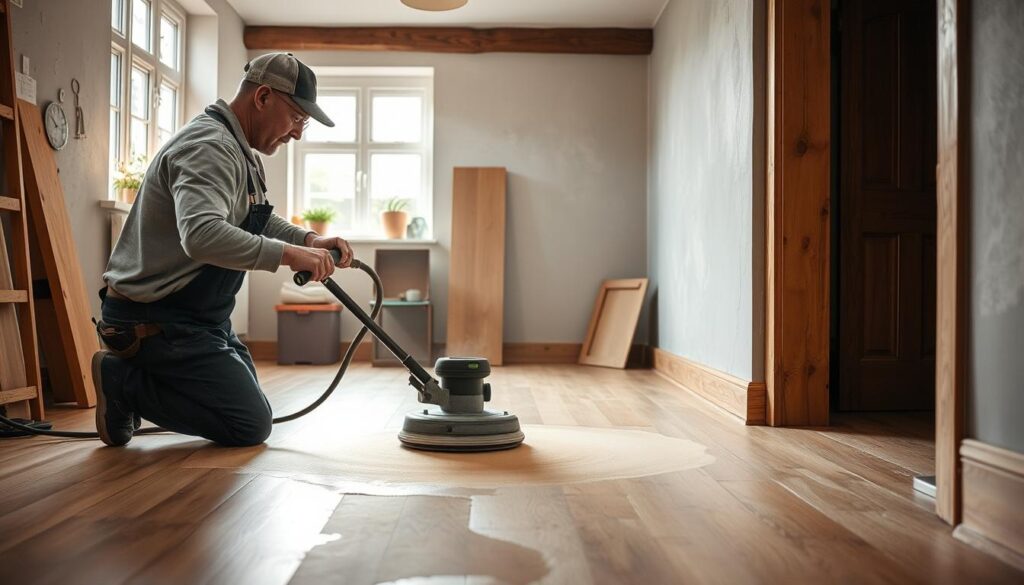
Across major cities including Johannesburg, Pretoria, Sandton, Randburg, and Roodepoort, specialist services typically charge between R800 to R2000 per square metre. They also work in Eastrand, Midrand, and Centurion. Hourly rates range from R300 to R600.
Most homeowners invest around R1400 per square metre for complete refinishing.
But here’s what many don’t realise: the self-service approach involves hidden expenses. Equipment rental, materials, and potential mistakes can dramatically alter your initial budget calculations.
At Handyman Pretoria, we believe in transparency. We’re here to help you understand the full picture. You can then choose what’s genuinely best for your situation.
Let’s examine the real numbers behind both approaches – Contact Us
| Factor | Self-Service Approach | Specialist Services |
|---|---|---|
| Initial Investment | R500-R1200 (equipment hire) | R800-R2000 per sqm |
| Time Required | 2-4 days (learning curve) | 1-2 days (completed) |
| Quality Assurance | Variable results | Guaranteed finish |
| Risk Level | High (potential damage) | Low (insured work) |
Understanding the Real Costs of Floor Sanding in South Africa – DIY vs. Professional Floor Sanding
Floor sanding prices across South Africa vary dramatically. Knowing what drives these differences helps you plan your budget effectively. We’ve seen homeowners surprised by quotes ranging from a few thousand rand to tens of thousands.
The truth is simple. Floor sanding costs aren’t determined by a single factor. Multiple elements interact with your specific situation to determine the final price.
At Handyman Pretoria, we believe transparency matters. Understanding the real cost factors in floor refinishing helps you make smarter decisions. This knowledge puts you in control from the start.
Regional economic conditions play a significant role in pricing across Gauteng and beyond. Johannesburg commands premium rates of R300-R600 per hour for quality restoration work. This reflects the city’s higher living costs and competitive demand.
Sandton and Randburg typically show 10-15% higher pricing compared to Roodepoort or the East Rand. Pretoria and Centurion often offer more competitive rates without compromising on quality.
Key Factors That Determine Your Floor Sanding Budget
Your budget for floor refinishing project depends on several interconnected variables. We’ve identified the primary cost drivers that affect every floor sanding project. These factors apply whether you’re tackling it yourself or hiring professionals.
Room size and accessible area form the foundation of any cost calculation. A small bedroom measuring 12m² requires considerably less time, materials, and labour. This contrasts sharply with a sprawling 40m² lounge.
However, size alone doesn’t tell the complete story.
Current floor condition dramatically impacts both floor sanding labor cost and materials requirements. Well-maintained floors in excellent condition need only light sanding with fine-grit abrasives. Badly damaged surfaces require multiple passes starting with coarse grits.
This can double or even triple the time investment and material consumption.

Location matters more than many homeowners realise. Local floor sanding cost variations reflect labour availability and material supplier proximity. Established woodworking industries in each region also influence pricing.
Johannesburg’s premium rates contrast sharply with more competitive pricing in Pretoria. This is where we at Handyman Pretoria operate.
The choice between DIY equipment rental and professional services represents another significant budget consideration. DIY approaches might seem cost-effective initially. However, the labor vs materials cost floor sanding equation becomes complex quickly.
You must factor in equipment rental periods, learning curves, and potential mistakes.
Finishing options selected can add substantially to your total investment. A simple polyurethane seal costs considerably less than specialised stains. Oils or multi-coat lacquer systems increase costs further.
Each finishing choice affects both material costs and application time.
| Project Scenario | Location | Floor Condition | Estimated Cost Range |
|---|---|---|---|
| Small bedroom (12m²) | Pretoria | Good condition, light refresh | R2,800 – R4,200 |
| Medium lounge (25m²) | Roodepoort | Moderate wear, standard prep | R6,500 – R9,750 |
| Large lounge (40m²) | Sandton | Heavy damage, extensive prep | R14,000 – R22,000 |
| Open-plan area (55m²) | Johannesburg CBD | Poor condition, repairs needed | R20,000 – R32,000 |
This comprehensive comparison illustrates how location, size, and condition combine to create different budget requirements. A floor sanding price calculator must account for all these variables. This provides accurate estimates rather than misleading generalisations.
Material supplier proximity affects materials cost for floor sanding through transportation expenses. Bulk purchasing opportunities also play a role. Areas with established woodworking industries typically offer better pricing on abrasives, sealants, and finishing products.
We’ve built strong relationships with Gauteng suppliers. This helps us keep costs competitive for our clients.
Why Floor Type and Condition Matter for Your Budget
Different wood species behave completely differently under sanding equipment. This directly impacts both time requirements and cost implications. Understanding the cost of sanding different wood types helps you set realistic expectations.
Hardwoods like oak are denser and require more time. They also need specialist knowledge and higher-quality abrasives. An oak floor sanding cost analysis reveals that these beautiful floors demand patience and expertise.
The density that makes oak durable also makes it challenging to sand evenly. This increases the risk of creating waves or gouges.
Softwoods like pine sand more quickly, which sounds advantageous initially. However, pine floorboard sanding cost calculations must account for the extra care required. Pine’s softer nature means aggressive sanding can create dips.
Inconsistent pressure leaves visible marks that ruin the final appearance.
Floor age introduces additional complexity that affects assessing floor sanding project cost accurately. Older floors commonly present several challenges. These include nail protrusion requiring hammering down and board warping that needs addressing.
Gaps between boards require filling compounds. Multiple layers of old finish complicate removal.
| Wood Type | Common Condition Issues | Sanding Difficulty | DIY Suitability | Cost Implications |
|---|---|---|---|---|
| Oregon Pine | Softwood denting, resin pockets, uneven wear patterns | Medium-High | Moderate (requires careful technique) | Lower materials, higher risk of mistakes |
| Oak | Dense grain, existing finishes difficult to remove | High | Low (specialist knowledge essential) | Higher labour time, premium abrasives needed |
| Meranti | Variable density, grain tearout potential | Medium | Moderate (forgiving for beginners) | Standard materials, moderate time investment |
| Beech | Hardness variation, prone to surface checking | Medium-High | Low-Moderate (requires experience) | Specialised finishing needed, medium-high cost |
Floor condition categories dramatically affect your hardwood floor refinishing price guide expectations. We categorise floors into condition levels that help determine appropriate approaches. This also helps establish realistic budgets.
Excellent condition floors show minimal wear with intact finish and no structural issues. These require only light refreshing with fine-grit abrasives. This makes them ideal for confident DIY enthusiasts.
The wooden floor sanding and sealing cost remains modest because preparation work is minimal.
Good condition floors display moderate surface wear with some finish deterioration. However, they show no serious damage. Standard sanding sequences handle these effectively.
Professional results require understanding grain direction and pressure control. Floor preparation costs increase slightly due to thorough cleaning and minor repairs.
Fair condition floors present noticeable wear and finish damage. Minor scratches and possibly some board movement are visible. These projects demand more extensive preparation including gap filling and nail setting.
The cost to remove old floor finish becomes significant here. Multiple layers of varnish, paint, or wax may have accumulated over decades.
Poor condition floors show severe wear and structural issues. Major scratches or gouges are evident. Extensive repairs are needed before sanding begins.
These challenging projects require professional assessment to determine whether restoration makes economic sense. A detailed floor sanding materials breakdown for poor-condition floors reveals substantially higher consumption. This includes coarse abrasives, filler compounds, and finishing products.
| Condition Category | Preparation Required | Sanding Sequence | Time Impact | Budget Multiplier |
|---|---|---|---|---|
| Excellent | Basic cleaning, minor dust removal | Fine grit only (120-180) | Baseline | 1.0x |
| Good | Thorough cleaning, nail checks, light repairs | Medium to fine (80-180) | +30-40% | 1.3x |
| Fair | Gap filling, nail setting, board securing, finish removal | Coarse to fine (40-180) | +60-80% | 1.7x |
| Poor | Extensive repairs, board replacement, structural fixes | Extra coarse to fine (24-180) | +120-150% | 2.3x |
We’ve completed hundreds of projects across Pretoria, Centurion, and surrounding areas. This gives us insight into how these factors combine in real-world situations. A homeowner in Waterkloof recently contacted us about their Oregon pine floors.
They assumed the project would be straightforward because pine is a softwood. However, decades of accumulated wax and several layers of varnish changed everything. The average cost of professional floor refinishing exceeded their initial estimates by 40%.
Another client in Menlyn wanted to tackle their oak flooring as a DIY weekend project. After struggling with rented equipment, they created visible sanding marks. They called Handyman Pretoria to complete the work professionally.
The combined cost of their DIY attempt plus our professional correction exceeded what professional service would have cost initially. This is a common scenario we encounter.
Understanding these cost determinants helps you approach your floor sanding project with realistic expectations. These factors determine your final investment. The floor sanding supplies price list represents just one component of a complex cost equation.
This equation includes time, expertise, and risk management.
At Handyman Pretoria, we provide detailed assessments that consider your specific floor type. We also evaluate current condition and project goals. Our transparent approach to cost to sand and stain wood floors ensures you understand exactly what you’re paying for.
We believe informed clients make better decisions and achieve more satisfying results. This applies whether they ultimately choose our professional services or decide to tackle the project themselves.
DIY vs. Professional Floor Sanding: A Full Cost Analysis
Understanding the full cost of floor sanding helps you budget accurately and choose wisely. This detailed analysis reveals what you’ll actually spend on your project.
We’ve gathered current pricing data from across South Africa’s major cities. This comprehensive breakdown covers everything from equipment rental to hidden expenses that catch homeowners off guard.
Complete DIY Floor Sanding Cost Breakdown
The diy wood floor sanding cost extends far beyond simply renting a sander for the weekend. Many homeowners underestimate the total investment required for a successful DIY project.
The cost to refinish hardwood floors yourself involves three major categories. Equipment rental forms the foundation of your budget. Materials and consumables add significant expense, whilst hidden costs often inflate final totals by 20-30%.
Equipment Rental Costs Across Pretoria, Johannesburg, Cape Town and Durban
Understanding how much to hire a floor sander requires examining regional pricing variations. We’ve compiled current rental rates from major equipment hire companies across South Africa’s primary metropolitan areas.
| Equipment Type | Daily Rate | Weekly Rate | Project Duration (3-bed home) |
|---|---|---|---|
| Drum Sander | R300-R500 | R1,200-R2,000 | 3-5 days |
| Orbital/Edging Sander | R150-R250 | R600-R1,000 | 2-4 days |
| Dust Extraction System | R200-R300 | R800-R1,200 | 3-5 days |
| Corner/Detail Sander | R100-R150 | R400-R600 | 1-2 days |
The drum sander rental price represents your largest equipment expense. For a typical three-bedroom home, you’ll need equipment for 3-5 days minimum. This brings total rental costs to R2,000-R4,000 before materials.
Regional variations affect floor sander rental cost significantly. Johannesburg and Cape Town typically charge 10-15% more than Pretoria and Durban. This reflects higher operational costs and demand.
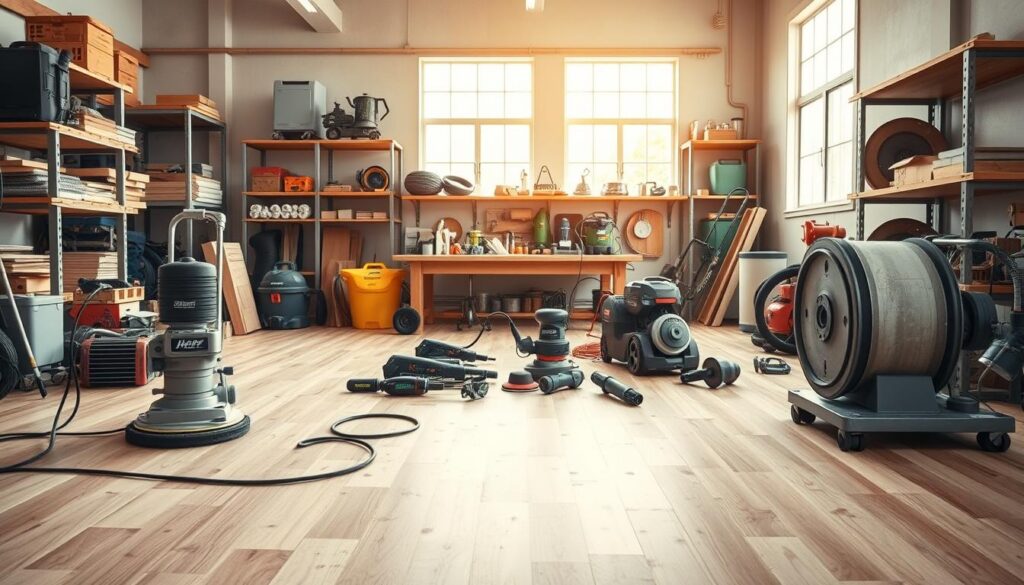
Your diy floor sanding equipment list extends well beyond the sanders themselves. Materials and consumables typically add R1,500-R3,000 to your project budget.
| Material Category | Items Required | Quantity Needed | Cost Range |
|---|---|---|---|
| Sandpaper (Multiple Grits) | 40, 60, 80, 100, 120 grit sheets | 15-25 sheets total | R500-R800 |
| Wood Fillers & Repairs | Gap filler, wood putty, repair compound | 2-3 containers | R200-R400 |
| Finishing Products | Polyurethane, oil-based or water-based sealer | 3-5 litres | R400-R800 |
| Application Tools | Brushes, rollers, lambswool applicators | Complete set | R200-R400 |
| Safety Equipment | Respirator masks, safety goggles, knee pads | Complete set | R200-R400 |
The cost of sandpaper for floor sanding often surprises DIY enthusiasts. You’ll progress through multiple grit levels. Mistakes requiring re-sanding can double sandpaper expenses quickly.
Polyurethane finish cost varies substantially based on quality and brand. Professional-grade products deliver superior durability but command premium prices of R400-R800 per litre. Most projects require 3-5 litres for proper coverage.
Hidden DIY Costs You Need to Budget For
The hidden costs of diy floor sanding frequently transform “budget-friendly” projects into expensive learning experiences. We’ve identified expenses that catch homeowners unprepared.
- Equipment damage deposits: Rental companies require R500-R1,000 refundable deposits that tie up cash flow
- Potential repair charges: Damaged sanders or accessories result in deductions from your deposit
- Waste disposal fees: Dust and old finish removal costs R200-R400 depending on volume
- Additional sandpaper purchases: Mistakes requiring re-sanding add R300-R500 to material costs
- Floor repair materials: Gouges from sander misuse require R400-R800 in repair supplies
Beyond monetary expenses, the diy floor sanding pros and cons analysis must consider your time investment. A typical three-bedroom project consumes 20-30 hours of labour over multiple days.
If you value your weekend time at even R200 per hour, that represents R4,000-R6,000 in opportunity cost. Many homeowners discover that DIY projects costing R8,000-R12,000 in materials later require R15,000-R20,000 for professional fixes.
Professional Floor Sanding Investment Analysis
The value of professional floor sanding becomes apparent when you examine what’s included in comprehensive service packages. Hiring a floor sanding contractor eliminates equipment concerns, material sourcing headaches, and quality uncertainties.
Professional services deliver guaranteed results backed by warranties and insurance. Consider both immediate costs and long-term value.
Labour Costs Per Square Metre in Major South African Cities
Understanding professional floor sanding cost per square metre requires examining regional pricing across South Africa’s major metropolitan areas. Labour represents 70-80% of total professional costs.
| City/Region | Cost Per Square Metre | Typical Lounge (20m²) | Three-Bedroom Home (80m²) |
|---|---|---|---|
| Johannesburg | R180-R250 | R3,600-R5,000 | R14,400-R20,000 |
| Pretoria | R150-R220 | R3,000-R4,400 | R12,000-R17,600 |
| Sandton | R200-R280 | R4,000-R5,600 | R16,000-R22,400 |
| Cape Town | R180-R260 | R3,600-R5,200 | R14,400-R20,800 |
| Durban | R160-R230 | R3,200-R4,600 | R12,800-R18,400 |
These rates reflect comprehensive service from affordable floor sanding professionals who bring years of experience and professional-grade equipment. The professional floor sanding cost per square metre includes all materials, labour, and finishing work.
Regional variations stem from differences in operational costs, market competition, and service demand. Pretoria and Durban typically offer the most competitive rates. Sandton commands premium pricing due to clientele expectations and higher business overheads.
What’s Included in Professional Floor Sanding Quotes
Requesting a floor sanding quote online from companies like Handyman Pretoria provides comprehensive proposals detailing all included services. Understanding what’s covered helps you compare quotes accurately.
| Service Component | What’s Included | DIY Equivalent Cost |
|---|---|---|
| Equipment & Tools | Industrial-grade drum sanders, edgers, buffers, dust extraction systems | R2,000-R4,000 rental |
| Materials & Consumables | Professional-grade sandpaper, wood fillers, premium finishes (2-3 coats) | R1,500-R3,000 |
| Preparation & Protection | Furniture moving, room preparation, dust barrier installation | Your time + effort |
| Skilled Labour | Experienced technicians, multi-stage sanding process, expert finishing | 20-30 hours your time |
| Cleanup & Warranty | Complete dust removal, waste disposal, workmanship guarantee | R200-R400 + no warranty |
The professional floor sanding benefits extend beyond immediate cost considerations. Companies like Handyman Pretoria include dust-free systems that capture 97% of airborne particles. This protects your home’s interior and your family’s health.
Professional packages address the professional vs diy floor finish quality debate decisively. Industrial-grade equipment produces superior results that DIY approaches simply cannot match. Expert technicians prevent costly mistakes that plague inexperienced sanders.
Evaluating a floor sanding services cost estimate requires understanding what’s truly included. Comprehensive quotes cover furniture moving, complete floor assessment identifying hidden issues, and gap filling with minor repairs.
Professional services also include professional-grade staining if desired, multiple coats of premium finish, and thorough cleanup with waste disposal. Most importantly, they provide workmanship warranties protecting your investment.
If issues arise within the warranty period, companies like Handyman Pretoria return to address concerns at no additional cost. This protection is unavailable with DIY projects.
The hardwood floor restoration expenses comparison reveals that professional services cost only 30-40% more than comprehensive DIY projects. This modest premium delivers dramatically superior results. It eliminates personal time investment and provides warranty protection that safeguards your flooring investment for years.
Comparing Total Project Costs: Which Option Saves You Money – DIY vs. Professional Floor Sanding
Let’s break down the numbers and see which approach delivers genuine savings. The total project cost diy vs pro reveals far more than initial equipment rental fees. Many homeowners focus on upfront expenses without considering the complete financial picture.
Understanding the true cost of diy floor sanding requires factoring in multiple elements. These often catch people by surprise. We’ve helped hundreds of clients throughout Pretoria, Centurion, and Johannesburg make informed decisions.
Real Cost Comparison for Common Room Sizes
We’ve prepared detailed comparisons for three typical projects. These breakdowns reveal how project size affects the cost-benefit analysis. The cost to sand a 12×12 room varies significantly depending on your choice.
| Cost Element | Small Bedroom (12m²) | Medium Lounge (24m²) | Large Open-Plan (48m²) |
|---|---|---|---|
| DIY Equipment Rental | R1,200 (3 days) | R1,800 (4 days) | R2,800 (6 days) |
| DIY Materials & Consumables | R1,500 | R2,400 | R4,200 |
| DIY Hidden Costs | R600 | R900 | R1,500 |
| DIY Total Investment | R3,300 | R5,100 | R8,500 |
| Professional Service Cost | R5,600 (R145/m²) | R9,800 (R140/m²) | R17,500 (R135/m²) |
| Apparent Savings (DIY) | R2,300 | R4,700 | R9,000 |
These figures show why many homeowners initially lean towards DIY approaches. However, this comparison only tells part of the story. A comprehensive floor refinishing investment analysis reveals more.
We need to consider longevity and maintenance requirements. Professional work typically lasts 7-10 years before requiring attention. DIY results often need refinishing within 3-5 years due to application inconsistencies.
| Cost Analysis | DIY Approach | Professional Service | Long-Term Winner |
|---|---|---|---|
| Small Bedroom (12m²) | R825/year (over 4 years) | R700/year (over 8 years) | Professional (R125/year savings) |
| Medium Lounge (24m²) | R1,275/year (over 4 years) | R1,225/year (over 8 years) | Professional (R50/year savings) |
| Large Open-Plan (48m²) | R2,125/year (over 4 years) | R2,188/year (over 8 years) | Essentially equal |
This annual cost perspective reveals that professional floor refinishing services often represent better value. The price for floor sanding and varnishing includes expertise, warranties, and durability. DIY methods struggle to match these benefits.
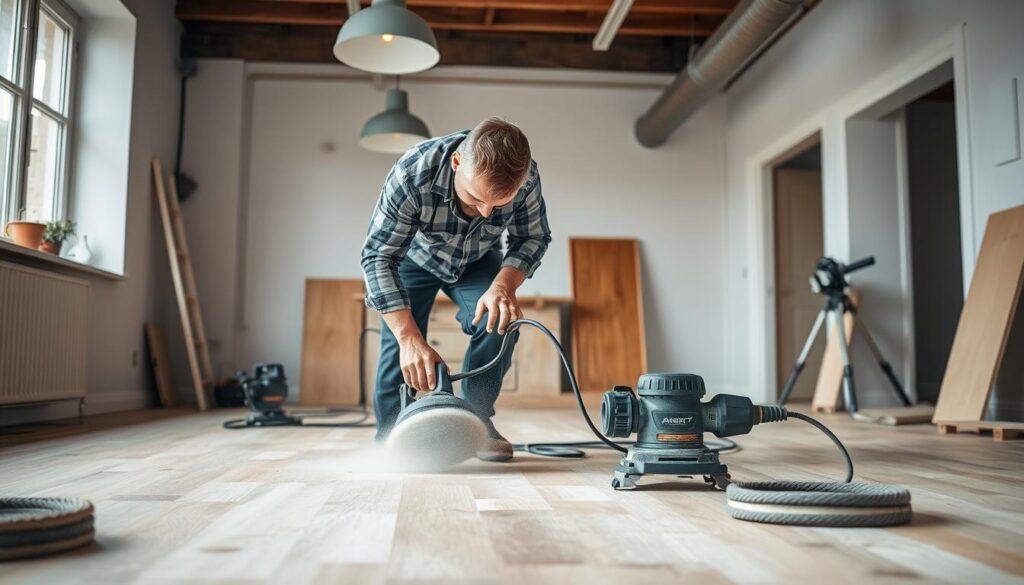
Time Investment and Opportunity Costs
Money isn’t the only investment you’ll make in your floor restoration project. The diy vs pro floor sanding time investment represents a significant factor. Many homeowners underestimate this initially.
We’ve tracked actual project timelines from dozens of clients. They attempted DIY before calling us for assistance. Their experiences provide valuable insights into realistic time requirements.
How Long DIY Floor Sanding Really Takes
The time cost of diy floor sanding extends far beyond the actual sanding process. We’ve broken down each phase based on real client experiences. These come from throughout Gauteng.
| Project Phase | Time Required | Skill Level Needed |
|---|---|---|
| Preparation & Furniture Removal | 4-8 hours | Basic |
| Equipment Learning & Setup | 1-2 hours | Moderate |
| Coarse Grit Sanding Pass | 4-6 hours | Advanced |
| Medium Grit Pass | 3-4 hours | Advanced |
| Fine Grit Pass | 2-3 hours | Advanced |
| Edge & Corner Detail Work | 3-5 hours | Expert |
| Cleaning Between Stages | 2-3 hours | Basic |
| Staining Application | 2-3 hours + drying | Advanced |
| Sealing Coats (2-3 applications) | 6-9 hours + drying | Advanced |
| Final Cleanup & Furniture Return | 2-3 hours | Basic |
For a medium-sized lounge, you’re looking at 30-50 hours of active work. This spreads across 5-7 days. Most clients found this consumed their entire weekends plus additional evening hours.
Consider the opportunity cost calculation. If your professional time is worth R200 per hour, that represents R6,000-R10,000 in lost productive time. This figure alone often exceeds the apparent savings from choosing DIY.
Professional Timeline and Efficiency Benefits
The efficiency benefits of hiring floor sanding professionals become immediately apparent. Our teams at Handyman Pretoria complete most residential projects within remarkably compressed timeframes.
| Project Stage | Professional Timeline | Your Involvement Required |
|---|---|---|
| Initial Assessment & Quote | 1 hour | 1 hour |
| Complete Sanding Process | 4-8 hours (medium room) | None |
| Finishing Application | 2-3 hours | None |
| Drying Time (managed) | 4-24 hours between coats | None |
| Final Inspection | 30 minutes | 30 minutes |
Your total personal time investment with professional services amounts to approximately 90 minutes. The project completes within 1-2 days instead of consuming an entire week.
This dramatic time difference explains why busy professionals choose our services. Working parents and property investors consistently do the same. The floor sanding price per hour they pay represents far better value.
Risk Factors and Potential Additional Expenses
Understanding the risk of diy floor sanding requires honest examination. We’ve repaired dozens of DIY attempts gone awry. The patterns are remarkably consistent.
The cost to fix diy floor sanding errors often exceeds what professional service would have cost initially. Let’s examine the most common problems we encounter.
| DIY Problem | How It Happens | Repair Cost Range | Prevention Method |
|---|---|---|---|
| Deep Gouges & Scratches | Improper sander technique, wrong grit sequence | R3,000-R8,000 | Professional expertise |
| Uneven Surface Finish | Inconsistent pressure, missed areas | R8,000-R15,000 | Systematic process |
| Blotchy Stain Application | Poor surface prep, incorrect products | R5,000-R10,000 | Industrial equipment |
| Premature Finish Wear | Inadequate sealing, contaminated surface | R6,000-R12,000 | Quality materials |
| Equipment Damage Fees | Operator error, misuse | R500-R2,000 | Professional handling |
These represent common diy floor sanding mistakes to avoid. Yet they occur with alarming frequency. One Pretoria homeowner spent R8,500 on DIY materials and equipment.
They achieved poor results, then paid us R16,000 for complete correction. That’s a total of R24,500 versus R14,000 if choosing professional service initially.
The long term cost of poor floor sanding extends beyond immediate repair expenses. Improperly finished floors require more frequent maintenance. They suffer accelerated wear and can actually decrease your property’s market appeal.
Professional services eliminate these risks entirely through comprehensive insurance coverage. Our floor sanding service agreement typically covers workmanship for 2-5 years. This provides peace of mind that DIY approaches cannot match.
Why Handyman Pretoria Clients Choose Professional Services
We’ve asked our clients throughout Pretoria, Centurion, Sandton, and Johannesburg why they chose professional services. Their responses reveal compelling reasons that extend beyond simple cost calculations.
The value of guaranteed results professional sanding cannot be overstated. Your floors represent a significant investment in your home’s appearance and value. Certainty matters tremendously.
“I initially planned to sand our lounge floor myself to save money. After researching the process thoroughly, I realised the cost of hiring a floor finishing expert was actually reasonable compared to the risk of ruining our beautiful yellowwood floors. Handyman Pretoria completed the job in two days with flawless results.”
This Waterkloof client’s experience echoes what we hear repeatedly. The perceived savings from DIY approaches diminish rapidly. This happens when people understand the comprehensive diy floor sanding checklist and cost involved.
A Centurion couple shared their perspective on the benefits of hiring floor sanding professionals. This came after initially attempting DIY work:
“We spent an entire weekend struggling with rented equipment and barely completed the coarse sanding pass. Our backs ached, dust covered everything despite our efforts, and the results looked uneven. We called Handyman Pretoria on Monday morning. They fixed our mistakes and completed the entire project properly within 48 hours.”
Property investors particularly appreciate how professional services affect their bottom line. One Sandton landlord manages five rental properties. He invests exclusively in professional floor restoration.
“Professional floor finishing actually reduces my maintenance costs over time. The quality finish lasts years longer than DIY attempts, and beautifully restored floors help me attract better tenants who pay premium rents. The home value increase after floor refinishing is measurable when properties appraise.”
Research supports his observation. Professionally finished floors can increase property values by 2-5%. Poorly executed DIY work may actually decrease market appeal.
Estate agents throughout Gauteng consistently report that floor condition significantly influences buyer perceptions. It also affects offers.
| Client Priority | Why They Choose Professional Services | Typical Client Profile |
|---|---|---|
| Time Efficiency | Cannot sacrifice weekends or manage extended projects | Working professionals, business owners |
| Guaranteed Quality | Floors too valuable to risk with DIY experimentation | Heritage home owners, luxury properties |
| Physical Limitations | Project requires sustained physical effort and technical skill | Older homeowners, those with health considerations |
| Investment Protection | Want warranty coverage and insurance protection | Property investors, rental portfolio managers |
| Complete Service | Prefer comprehensive handling including furniture moving and cleanup | Busy families, those managing multiple responsibilities |
The floor sanding maintenance costs decrease substantially with professional work. Our systematic processes and industrial-grade equipment create finishes that resist wear. DIY applications cannot achieve this consistently.
Dust control represents another significant advantage. Our dust-free systems capture 97% of particles. This protects your home’s air quality and eliminates weeks of cleanup.
Multiple clients have mentioned this benefit specifically when explaining their decision.
Professional restoration can achieve over 100 years of floor durability. This requires periodic refinishing every 7-10 years. Such longevity demands proper technique, appropriate materials, and systematic processes.
Our clients consistently conclude that professional services deliver superior value. The combination of time savings, guaranteed results, risk
Conclusion: Making Your Floor Sanding Decision – DIY vs. Professional Floor Sanding
The final cost of refinishing wood floors depends on your specific situation. We’ve analysed the numbers carefully. The choice becomes clearer when you assess your priorities.
| Decision Factor | Choose DIY | Choose Professional |
|---|---|---|
| Available Time | 30-50 hours available | Limited time |
| Budget | Under R7,000 total | R1,400/m² investment |
| Experience Level | Previous woodworking skills | No experience needed |
| Quality Guarantee | Accept potential imperfections | Guaranteed results required |
| Floor Condition | Good condition, simple layout | Repairs needed, complex areas |
Comparing floor sanding quotes reveals that professionals often deliver better long-term value. Professional floor refinishing services include warranties and expertise. Your floors will need less frequent refinishing.
Is it hard to sand your own floors? The DIY floor sanding checklist shows significant challenges. A proper cost-benefit analysis must include risk factors and time investment.
We at Handyman Pretoria serve Johannesburg, Sandton, Centurion, Randburg, Roodepoort, Midrand and Eastrand. Our transparent pricing makes planning easier. Our floor sanding service agreement includes detailed breakdowns and guarantees.
Contact us for a floor sanding cost analysis today. Request a professional floor sanding bid through our floor sanding quote online system. Get a floor sanding analysis tailored to your project.
Reach out with questions anytime. We’re here to help you choose the right approach for your floors.