
Building Material Prices: Save Big with Affordable Building Material Prices and Insulation Material Cost in Pretoria, East, North, Centurion, Midrand, Johannesburg, Sandton & Gauteng
Struggling with your construction budget and the high Building Material Prices in South Africa? You’re not alone. We see how today’s daunting costs surprise homeowners and derail projects across Gauteng. It’s frustrating when your vision feels out of reach because of a difficult budget.
Don’t let your project stall. Take control of your expenses with Handyman Pretoria. We have the local expertise to navigate these prices, find smart savings, and get your job done right. Call us today to stop worrying about costs and start building with confidence.
Construction material costs now start at R6,500 per square metre for basic homes. Premium projects can reach R20,000 per square metre. Most companies charge between R10,000 and R15,000 per square metre.
This guide aims to help you make smart choices. Having reliable info helps you budget well for renovations or major projects – Contact Us!
Building Material Prices: Understanding Building Material Prices in South Africa for 2026
Handyman Pretoria closely monitors building material pricing in South Africa. We track changes across regions and seasons. Our daily updates help clients make smart choices for their projects.
The market shows interesting patterns. Building a new home typically costs 20-30% more than purchasing an existing property. However, new builds offer better efficiency and lower maintenance costs.
Gauteng’s construction costs are mid-range. New builds average R15,000 per square metre. This puts our region in the middle for construction costs in South Africa.
Market Trends and Price Influences
Global supply chain issues affect material availability and costs. Local manufacturing impacts which materials stay affordable. Currency changes quickly affect imported goods’ prices.
When the rand weakens, steel and electrical parts cost more. These changes can affect project budgets within weeks. Seasonal patterns also play a role in pricing.
Peak seasons see higher home building material costs. Slower periods offer better rates. Cement and aggregate prices often drop in winter when demand falls.
| Material Category | Peak Season Price Impact | Off-Season Savings | Best Purchase Timing |
|---|---|---|---|
| Cement & Concrete | 15-20% higher | 10-15% lower | May-July |
| Bricks & Blocks | 10-15% higher | 8-12% lower | June-August |
| Steel & Reinforcement | 12-18% higher | 5-10% lower | April-June |
| Aggregates & Sand | 8-12% higher | 15-20% lower | May-September |
How We at Handyman Pretoria Track Material Costs
We use several methods to monitor renovation material prices. Our supplier relationships help us compare prices and get good rates. We regularly survey suppliers to track price changes.
Our database includes bulk building material prices, wholesale rates, and retail costs. This helps us find the best deals. We update prices weekly for accurate project planning.
We’ve developed partnerships that benefit our clients. These often give access to wholesale building material prices and fast delivery. We help with both DIY and contractor building material prices.
Timing purchases right can save lots on projects. We advise on the best times to buy. We also help coordinate deliveries to cut storage costs and waste.
Essential Building Material Prices and Cost Breakdown – Building Material Prices
Accurate pricing data for core building materials is crucial for successful project planning in South Africa. Our team at Handyman Pretoria has gathered detailed cost information. This helps you budget effectively for your construction needs.
Material costs can vary based on supplier location, purchase quantities, and seasonal demand. We update our pricing database regularly. This reflects current market conditions and building material suppliers prices in the region.
Cement and Concrete Products
Cement is the backbone of most construction projects. The quality and type you choose affects structural integrity and your budget. Understanding different cement grades helps make informed decisions about specific applications.
Cement Price Per Bag
Standard Portland cement costs R80 to R120 per 50kg bag. The cement price per bag varies due to transport costs and bulk discounts. We suggest buying 20 bags or more for better rates.
Premium cement brands cost more but offer better consistency and strength. For structural uses, the extra cost often justifies the improved performance.
Ready Mix Concrete Costs
Ready-mix concrete is convenient and consistent, but pricier than site mixing. Standard grade concrete costs R1,200 to R1,800 per cubic metre, including delivery. A typical 100 square metre property foundation needs 16 cubic metres, costing from R23,000.
Higher grade concrete for special uses can cost R2,500 per cubic metre. The convenience often outweighs the extra expense, especially for smaller home projects.
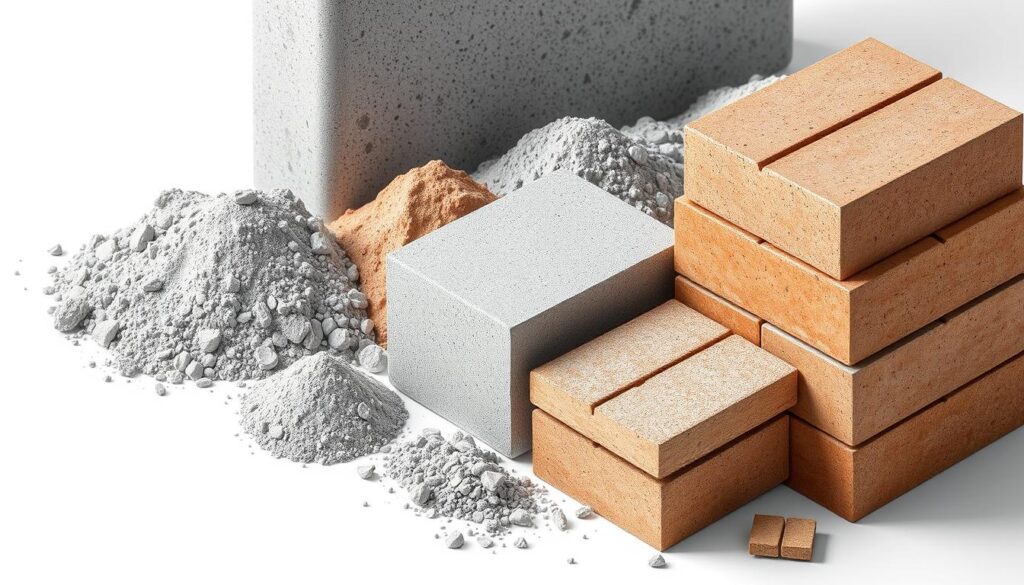
Bricks and Walling Materials
Brick choice greatly affects your budget and the look of your structure. We help clients balance cost with appearance and structural needs.
Clay Brick Prices Per 1000
Brick prices per 1000 range from R1,600 for standard clay bricks to R6,000 for premium face bricks. The price varies due to manufacturing processes, clay quality, and looks.
Face bricks for external walls without plastering cost R3,500 to R5,500 per thousand. These bricks don’t need external rendering, potentially saving on labour costs.
Cement Stock Brick Costs
Cement stock bricks offer great value for structural uses where looks matter less than strength. They cost R1,800 to R2,800 per thousand. These bricks are popular for internal walls and foundations.
We often suggest cement stock bricks to maximise building budgets. Their consistent size and reliable strength make them ideal for load-bearing applications.
Sand, Stone and Aggregates
Quality aggregates are key for strong concrete and drainage around structures. Knowing different types and their uses ensures best performance and cost-effectiveness.
Building Sand Price Per Cubic Metre
River sand costs more due to its high quality and rounded grains. Expect to pay R180 to R280 per cubic metre. Sand price per cubic meter changes often reflect transport distances.
Manufactured sand is cheaper at R120 to R180 per cubic metre. It’s slightly less ideal for some uses but works well for most home building needs.
Stone and Aggregate Costs Per Ton
Crushed stone and aggregates prices vary by size and use. Standard building stone costs R150 to R250 per ton. Specialised aggregates for concrete cost R180 to R320 per ton.
We suggest coordinating aggregate deliveries with neighbours or planning multiple projects at once. Bulk orders often get big discounts and lower per-unit transport costs.
Regional Price Variations Across Gauteng and SA – Building Material Prices
Location greatly affects building material costs in South Africa’s economic heartland. Understanding these differences can save thousands on your construction project. Our Gauteng experience reveals the best deals without sacrificing quality.
Construction prices vary significantly based on project location. These differences impact basic materials and specialised components alike. Researching regional pricing can make or break a project’s profitability.
Johannesburg Building Material Costs
Johannesburg, South Africa’s economic hub, presents unique pricing challenges. Electrical components prices are higher in central areas due to commercial development demand. However, the competitive market often balances these costs through bulk buying opportunities.
Industrial areas like Germiston and Boksburg offer better rates for basic materials. We source cement, bricks, and aggregates from these locations. Savings can reach 15-20% compared to central Johannesburg suppliers, especially for large orders.
Window and door prices vary across Johannesburg districts. Premium areas cost more, while industrial zones offer better value. We’ve partnered with suppliers providing consistent quality at competitive rates citywide.
Pretoria and Centurion Pricing Considerations
Pretoria and Centurion offer advantages for construction material sourcing. Our local knowledge gives access to overlooked supplier networks. Proximity to manufacturing facilities often results in lower transportation costs, benefiting our clients.
Insulation and drywall prices are more competitive in these areas. Tile prices are particularly favourable due to local distribution centres. This regional advantage helps manage project costs while maintaining quality standards.
Commercial construction costs vary by building type. Office buildings typically cost R15,000 to R20,000 per square metre. Retail spaces range from R12,000 to R18,000 per square metre.
Industrial buildings cost between R7,000 and R12,000 per square metre.
Delivery Costs and Supplier Selection Tips
Delivery expenses significantly impact your material budget. We’ve partnered with suppliers offering reasonable rates and reliable schedules. Distance, accessibility, and timing all influence these costs substantially.
Our building cost calculator includes delivery charges from the start. We factor in concrete prices alongside transportation costs. This approach prevents budget surprises during construction.
Supplier selection involves more than comparing unit prices. We evaluate reliability, quality consistency, and service levels carefully. The cheapest supplier isn’t always the most cost-effective choice.
| Material Category | Johannesburg Average | Pretoria/Centurion Average | Potential Savings | Best Sourcing Areas |
|---|---|---|---|---|
| Building Hardware Prices | R450/unit | R380/unit | 15-18% | Industrial districts |
| Fasteners and Fixings Cost | R280/kg | R240/kg | 12-15% | Manufacturing zones |
| Material Price Trends Construction | Higher volatility | More stable | 10-20% | Direct suppliers |
| Delivery Charges | R1,200/load | R800/load | 25-35% | Local suppliers |
We suggest building relationships with multiple suppliers across regions. This strategy provides flexibility during shortages and secures better pricing through competition. Our network spans Gauteng, ensuring consistent supply chains for all projects.
Regional pricing knowledge is crucial for larger projects. Strategic sourcing can save tens of thousands of rands on substantial developments. We use this expertise to keep construction costs competitive while maintaining quality.
Conclusion – Building Material Prices
Understanding market conditions helps you make better construction decisions. Our guide covers essential costs from plaster sand to specialised materials like high tensile rebar. We provide prices across Johannesburg, Centurion, and Pretoria.
Building from scratch lets you create your ideal home. It can save money long-term. Remember, professional fees are significant additional costs.
Architects charge up to 8% of construction cost. Land surveyors may charge up to 5%. Structural engineers typically charge 2%, while quantity surveyors can charge up to 4%.
Price comparison is crucial when considering materials. This includes clay bricks, cement stock bricks, and face bricks. Roofing options also affect your budget significantly.
Monitor river sand price changes and structural timber cost carefully. Building material delivery cost can impact your total expenses. Factor these into your calculations.
Use this pricing information as a starting point. Always get current quotes from multiple suppliers. Market conditions change often. Our team is here to help you achieve successful construction projects in Gauteng.